The Hongwu Emperor’s System of Rule
Also called: Lijia system, Six Edicts, Haijin, Sea ban
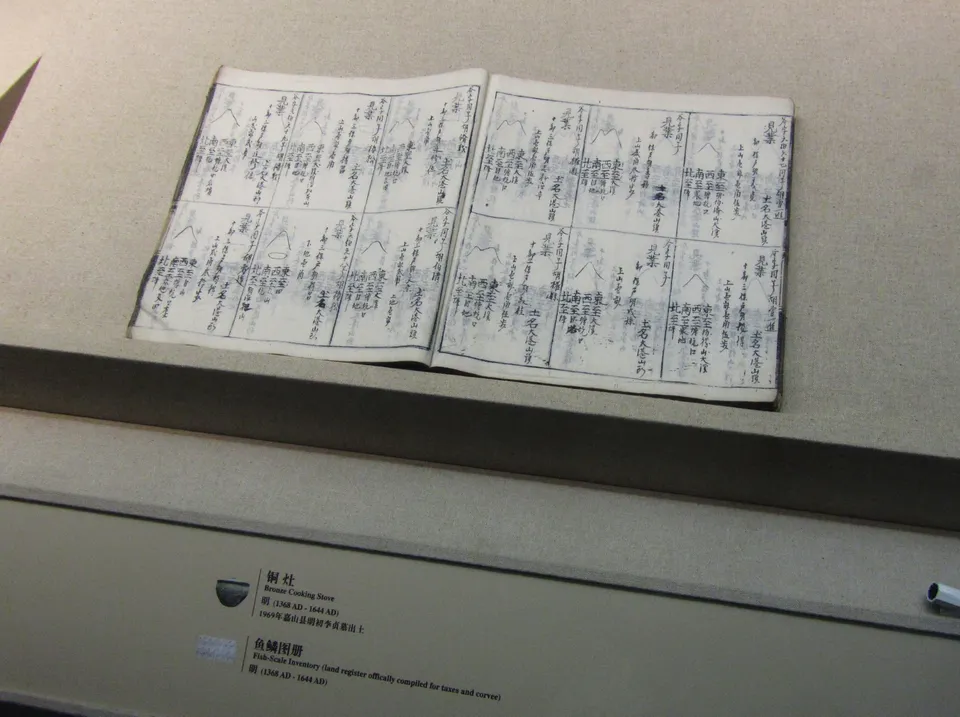
In 1380 the Hongwu Emperor abolished the chancellorship and the Secretariat, placing the Six Ministries directly under the throne, and governed the countryside through the lijia system and the Yellow Registers and Fish-scale Registers. He instructed the people with the Six Edicts and banned private sea trade.
猫猫的日记本 · CC BY-SA 3.0 · Source
In 1380 Hongwu executed the chancellor Hu Weiyong for treason and abolished both the Secretariat and the post of chancellor, so that the Six Ministries reported to the emperor himself. Military command was split among five chief military commissions, and hereditary soldier households were organised in the weisuo system. Sweeping purges of meritorious officials and bureaucrats sealed the emperor’s autocracy.
The countryside was run through the lijia system (1381): 110 households formed a li, its ten wealthiest taking turns as village head. Households and taxes were recorded in the Yellow Registers and land in the Fish-scale Registers, and the Great Ming Code was promulgated. In 1397 the Six Edicts — “be filial to your parents, respect your elders, live in harmony with your neighbours …” — were issued for village heads and elders to teach. At sea, to stop pirates and keep trade in state hands, the sea ban forbade private voyages, and only trade accompanying tribute missions was allowed.
When Yi Seong-gye founded Joseon in 1392, Hongwu chose the name “Joseon” for the new state (1393). Joseon served the Ming as suzerain while maintaining neighbourly relations with Japan and the Jurchens (sadae gyorin), but under Hongwu relations were often strained, for example over the wording of state letters.