Religion6 July 1415

Execution of Jan Hus

Also called: Hussite Wars, Burning of Jan Hus

On 6 July 1415 the Bohemian theologian Jan Hus, a critic of the Church, was condemned as a heretic by the Council of Constance and burned, leading to the Hussite Wars.
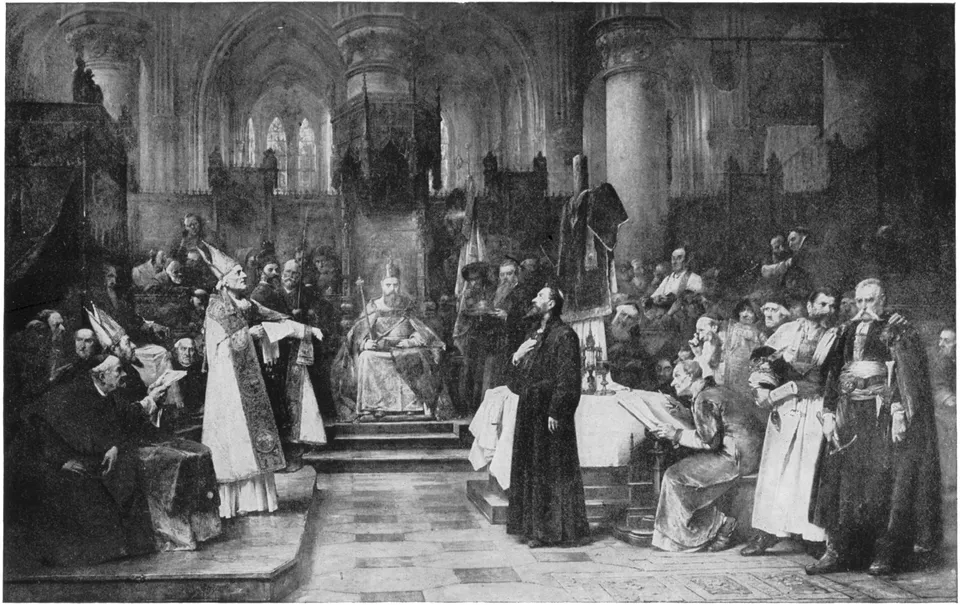
Jan Hus before the Council of Constance — Václav Brožík, 1883

Václav Brožík · Public domain · Source

Hus, a former rector of the University of Prague, was influenced by the Englishman Wycliffe; he attacked the wealth of the Church and the sale of indulgences, held Scripture to be the sole standard of faith and preached in Czech. He came to the Council of Constance under a safe-conduct from Sigismund, the future emperor, but was arrested and, refusing to recant, was burned on 6 July 1415.

Outraged Bohemians formed the Hussite movement from 1419 and repeatedly defeated the crusades sent by emperor and pope (the Hussite Wars, to 1434). Wycliffe and Hus are counted as forerunners of Luther’s Reformation a century later.

The map in 1415

OpenFreeMap © OpenMapTiles © OpenStreetMap contributors

States at the time
Holy Roman Empire
Places
Constance

People

  • Jan Hus1415

    leader · Theologian of the University of Prague in Bohemia who, influenced by Wycliffe, criticised the Church and was burned as a heretic at the Council of Constance

  • John Wycliffe1384

    related figure · Oxford theologian who attacked the wealth of the Church and papal authority and had the Bible translated into English — a forerunner of the Reformation

Themes that include this event

  • Late Medieval Europe and the Renaissance1077 – 1517

    From Canossa to the eve of the Reformation — papal power at its height and in decline, towns and parliaments, royal power growing through the Hundred Years’ War and the Black Death, and the Renaissance and printing