Science2 August 1939

The Einstein–Szilard Letter

Also called: Einstein letter

In August 1939 Einstein signed a letter drafted by Szilard warning President Roosevelt that Nazi Germany might build an atomic bomb first and that the United States should speed up its own research.
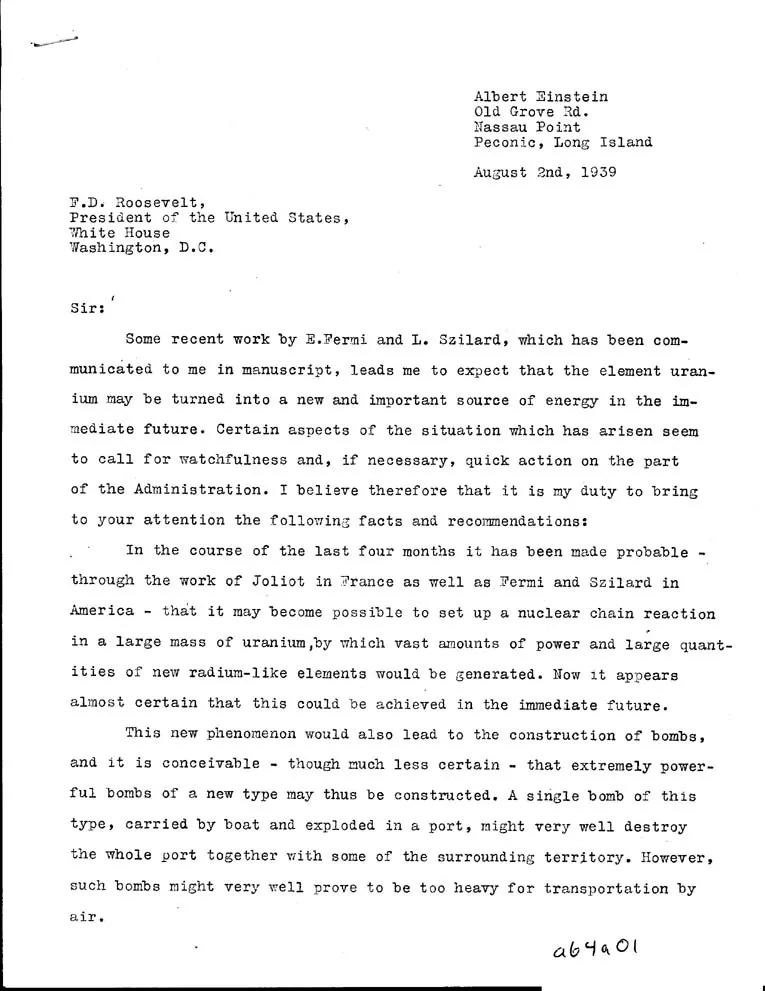
First page of the letter signed by Einstein and sent to Roosevelt — 2 August 1939

Written by Leó Szilárd and signed by Albert Einstein. · Public domain · Source

The Hungarian-born physicist Leo Szilard had been thinking about nuclear chain reactions since 1933 and, hearing of fission, feared Nazi Germany would build a bomb first; Germany’s halt to uranium exports from occupied Czechoslovakia alarmed him. In July 1939 he visited Einstein at his summer house in Peconic, Long Island, and persuaded him to warn the president in the name of the world’s most famous scientist.

The letter Einstein signed on 2 August said that "extremely powerful bombs of a new type" might be made with uranium and that Germany might already be working on them. It reached Roosevelt through his adviser Alexander Sachs on 11 October, after the Second World War had begun, and Roosevelt set up an Advisory Committee on Uranium. Einstein is said to have later called signing it "the one great mistake" of his life.
The map in 1939

OpenFreeMap © OpenMapTiles © OpenStreetMap contributors

States and rulers at the time
United States — President Franklin D. Roosevelt
Places
Peconic, Long Island

People

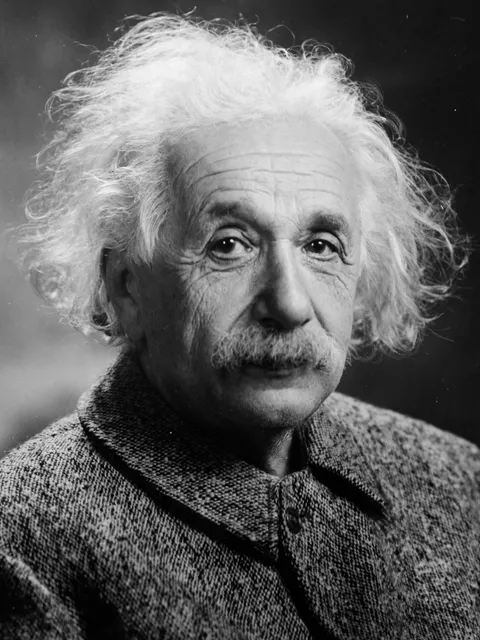
  • Albert Einstein1879 – 1955

    key figure · German-born physicist who developed the theory of relativity, emigrated to the US in 1933 fleeing the Nazis, and in 1939 signed the letter urging Roosevelt to develop the atomic bomb

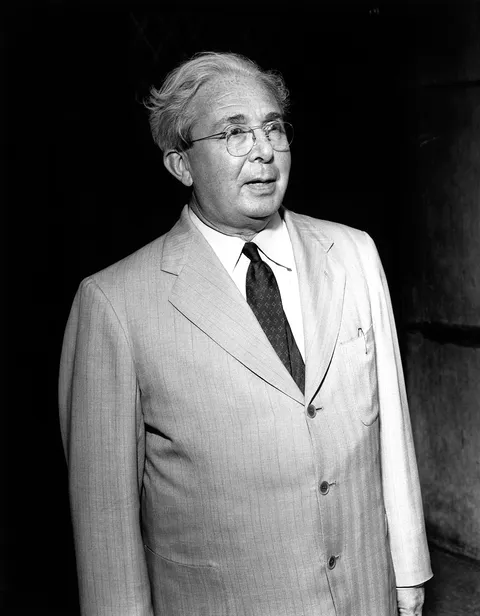
  • Leo Szilard1898 – 1964

    key figure · Hungarian-born physicist who first conceived the nuclear chain reaction and persuaded Einstein to write to Roosevelt warning of the atomic bomb

  • Franklin D. Roosevelt1882 – 1945

    related figure · 32nd US president (1933–1945) who led the New Deal and took the US to war after Pearl Harbor; he attended the Cairo and Yalta conferences

Before and after

Earlier
1933 New Deal
Later
1939 World War II

Themes that include this event

  • The Birth of the Atomic Bomb1938 – 1949

    From the discovery of fission to the first Soviet bomb — Einstein’s letter, the Manhattan Project, the Trinity test, Hiroshima and Nagasaki, and the dawn of the nuclear age