New Deal
Also called: Hundred Days, Modified capitalism
Taking office in the depths of the Depression, President Franklin Roosevelt launched the New Deal, using active government intervention to bring relief, recovery and reform.
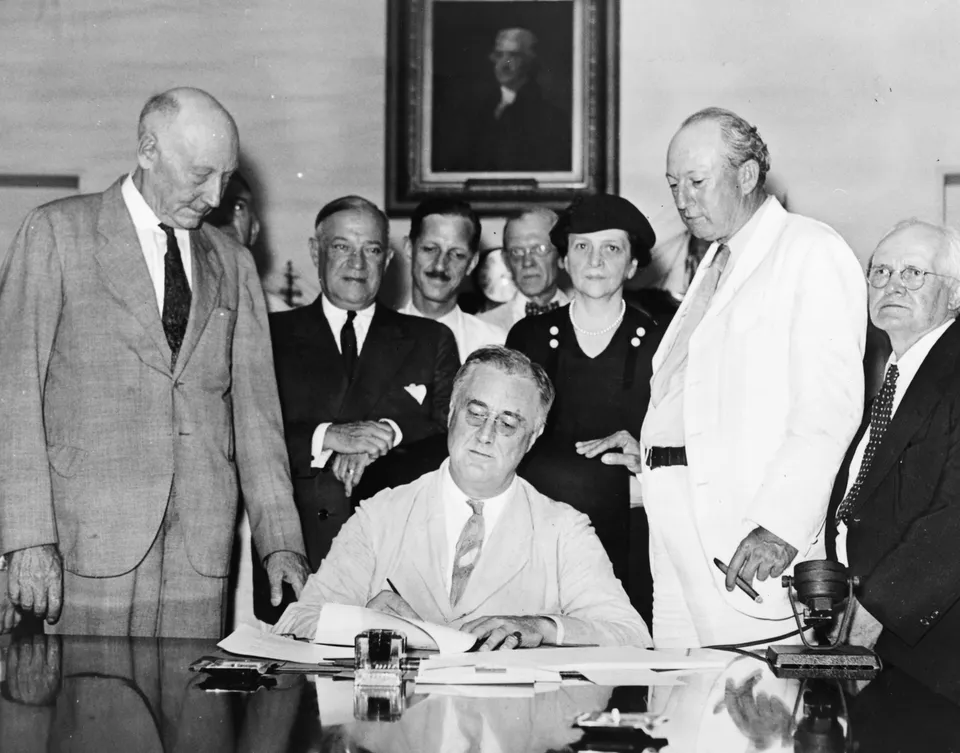
Social Security Online · Public domain · Source
Inaugurated on 4 March 1933, Roosevelt briefly closed the banks to halt the runs on deposits and in his first “Hundred Days” pushed through a stream of laws. The Agricultural Adjustment Act (AAA) paid farmers to cut production in order to raise farm prices, and the National Industrial Recovery Act (NIRA) combined industry codes on output and prices with workers’ right to organize. Public works such as the Tennessee Valley Authority (TVA) and the Civilian Conservation Corps (CCC) created jobs.
From 1935 the Wagner Act guaranteed the rights to organize and bargain collectively, and the Social Security Act set up unemployment insurance and old-age pensions. Opposition was strong, including Supreme Court rulings striking down laws, and unemployment ended only with the wartime boom, but the New Deal became the model of a modified capitalism in which the state, departing from laissez-faire, creates demand — an approach underpinned by the economics of Keynes.