Declaration of the Rights of Man and of the Citizen
Also called: Declaration of the Rights of Man, Déclaration des droits de l’homme et du citoyen
The National Assembly declared that men are born free and equal in rights, and proclaimed popular sovereignty and the separation of powers.
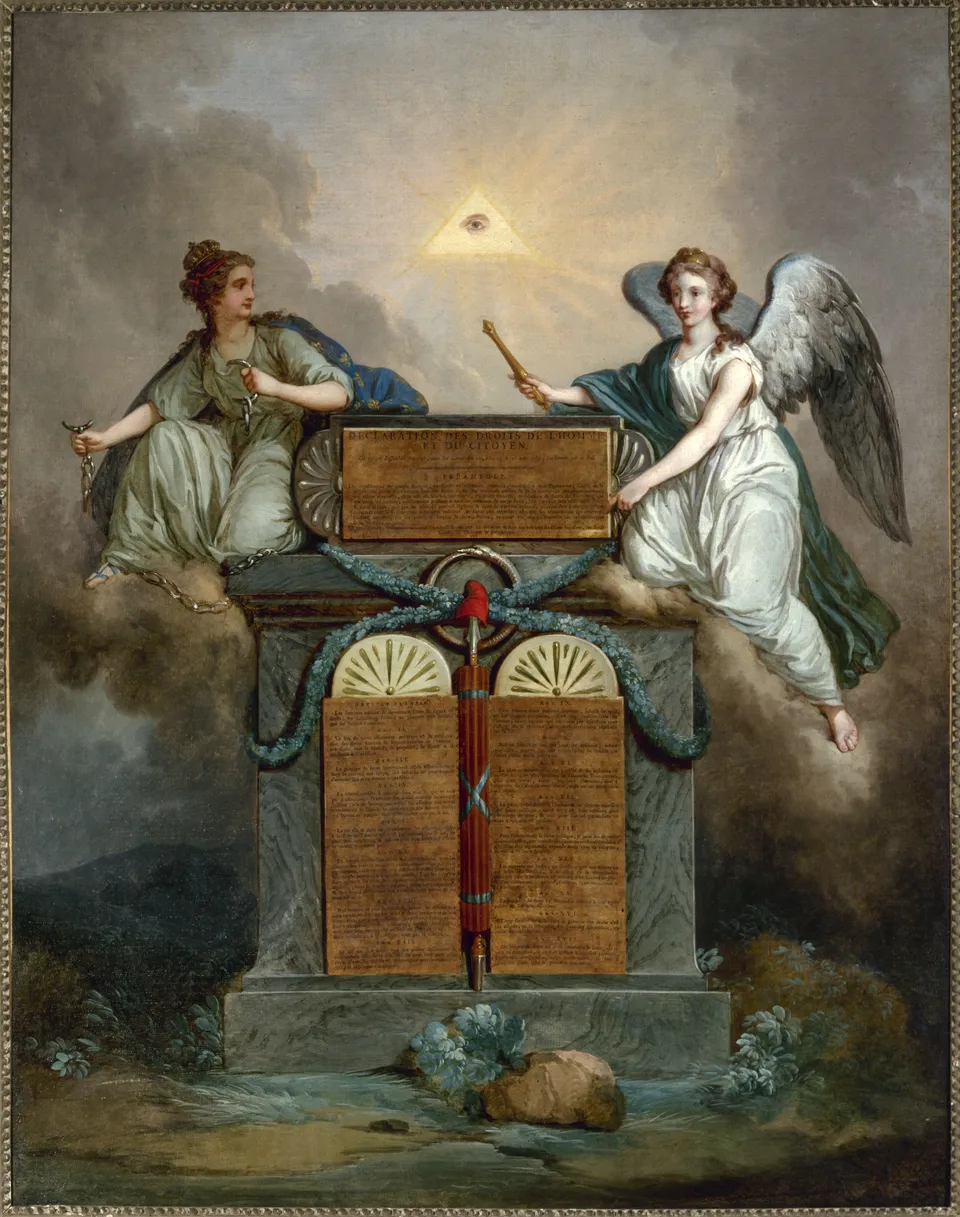
Jean-Jacques-François Le Barbier · Public domain · Source
Deciding to set out principles before writing a constitution, the Assembly adopted the seventeen-article Declaration of the Rights of Man and of the Citizen on 26 August 1789, drawing on drafts including Lafayette’s. Article 1 states that “men are born and remain free and equal in rights”. The Declaration names liberty, property, security and resistance to oppression as natural rights, places sovereignty in the nation and calls law the expression of the general will. It also sets out the rule of law in criminal justice, the presumption of innocence, freedom of expression and religion, and the separation of powers.
Shaped by the Enlightenment and the American Declaration of Independence, it became a landmark of modern human rights and is part of the French constitution today. Yet women and enslaved people in the colonies were left out; in 1791 Olympe de Gouges answered with her Declaration of the Rights of Woman and of the Female Citizen.