Cheonmado (Heavenly Horse Painting)
Also called: Heavenly Horse Mudguard
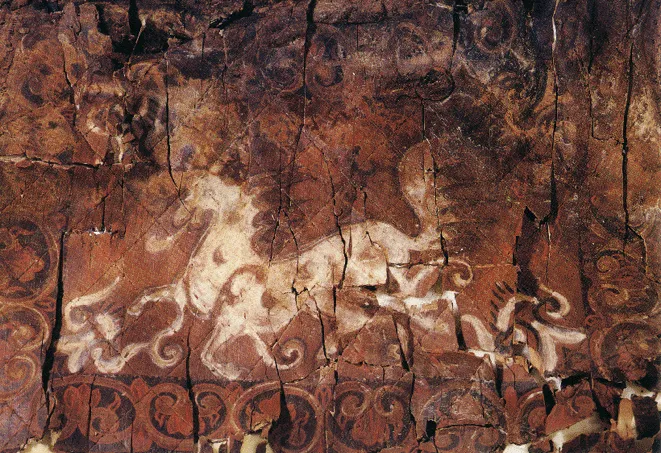
A Silla painting from the Cheonmachong tomb in Gyeongju: a white horse flying across a saddle flap — almost the only painting surviving from Silla.
Unknown author · Public domain · Source
It was found in 1973 when Cheonmachong (Tomb No. 155, Hwangnam-dong, Gyeongju) was excavated. A janni is a mudguard hung from the saddle to keep mud off the rider; this one is made of layers of birch bark, painted with a white horse galloping through the sky, tail raised, framed by a scroll border. It is a National Treasure.
Silla’s stone-mound wooden-chamber tombs had no stone chamber and so, unlike Goguryeo and Baekje tombs, no murals. The Cheonmado is therefore almost the only evidence of how Silla painted. Some scholars read the animal as a qilin, a mythical beast, rather than a horse. It is kept at Gyeongju National Museum.