Changdeokgung Palace, Seoul
A secondary palace built by King Taejong in 1405. Its halls follow the natural terrain, and after the Imjin War it long served as the main palace. It became a World Heritage Site in 1997.
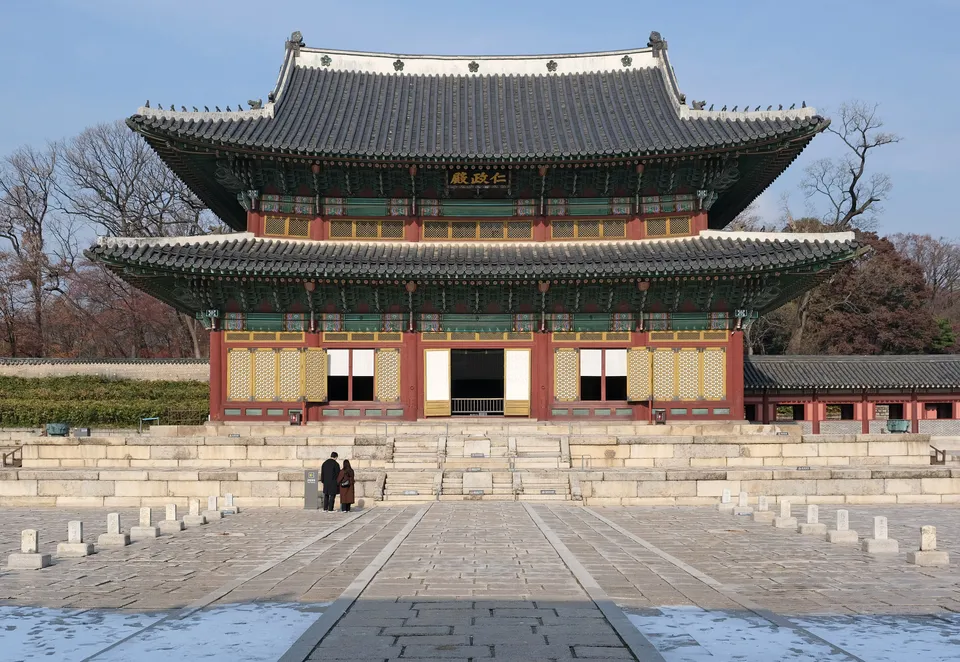
kallerna · CC BY-SA 4.0 · Source
When King Taejong moved the capital back to Hanyang, he built Changdeokgung in 1405 east of Gyeongbokgung as a secondary palace. After every palace burned in the Imjin War it was the first to be rebuilt, finished under Gwanghaegun, and for about 270 years, until Gyeongbokgung was rebuilt in 1868, it served as the main royal residence. With neighbouring Changgyeonggung it was called the "Eastern Palace".
Unlike Gyeongbokgung, laid out squarely along a central axis on flat ground, Changdeokgung places its halls freely without going against the slopes of the hills. It has the main gate Donhwamun, the throne hall Injeongjeon (a National Treasure), the king’s office Seonjeongjeon and the royal quarters Daejojeon, and to the north a rear garden of ponds and pavilions blended into nature. King Jeongjo set up the Gyujanggak there.
Recognized for palace architecture and landscaping in harmony with nature, it became a UNESCO World Heritage Site in 1997 together with Hwaseong Fortress. Sunjong, the last king of the dynasty, died in its Daejojeon hall in 1926.
