Geungnakjeon Hall, Bongjeongsa, Andong
The oldest surviving wooden building in Korea. A record of roof repairs in 1363 shows this Goryeo column-head-bracket hall was built well before then.
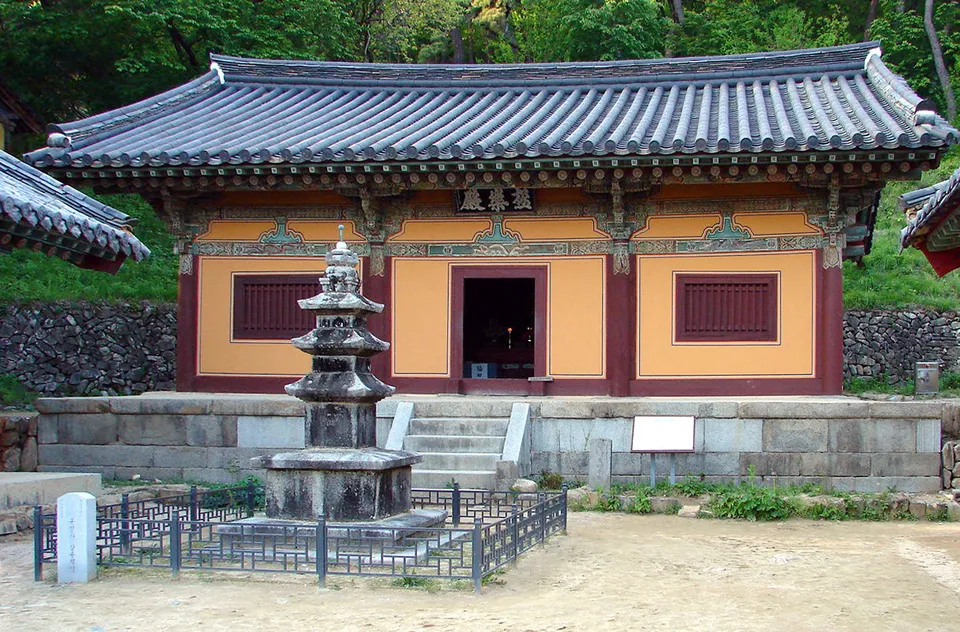
Steve46814 · CC BY-SA 3.0 · Source
A ridge-beam inscription found when the hall was dismantled for repair in 1972 recorded a major roof repair in 1363 (12th year of King Gongmin). Such repairs came some 100–150 years after construction, so the hall is thought to date from the 12th–13th century — the oldest wooden building surviving in Korea.
It uses the jusimpo style, with brackets (the joinery carrying the roof’s weight) only on top of the columns, a gabled roof shaped like the character 人 from the side, and entasis columns that swell in the middle. With Muryangsujeon at Buseoksa and Daeungjeon at Sudeoksa it is a staple of the exam’s Goryeo jusimpo halls.
It is a National Treasure, and Bongjeongsa became a UNESCO World Heritage Site in 2018 as one of the "Sansa, Buddhist Mountain Monasteries in Korea".