The Beginnings of the Roman Forum
Also called: Forum Romanum, Lapis Niger, Regia, Comitium
The marshy low ground between the Palatine and Capitoline hills, an Iron Age cemetery, was raised and first paved in the late 8th–7th century BC to become a square shared by the hill villages. The Regia of the 7th century and the 6th-century inscription under the “Black Stone” (Lapis Niger) bear witness to this age.
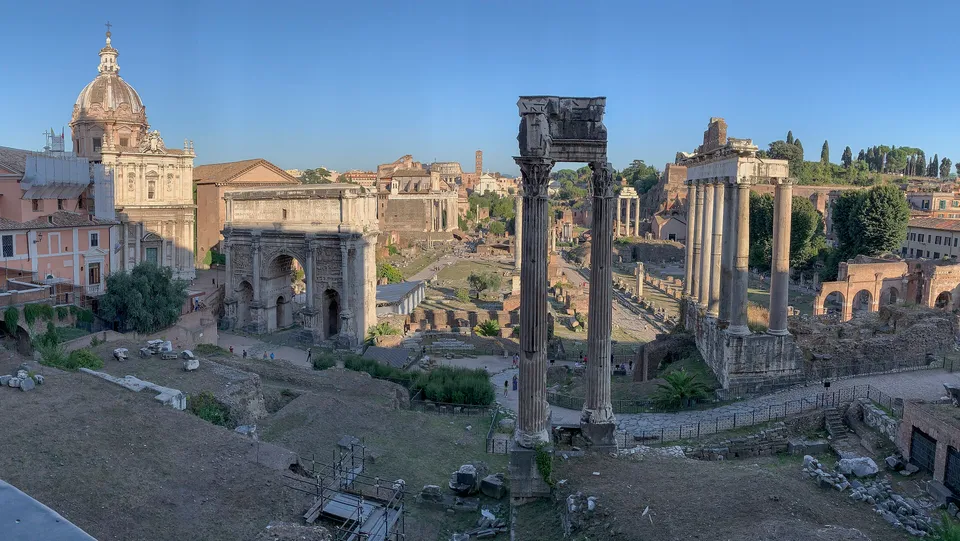
Nicholas Hartmann · CC BY-SA 4.0 · Source
The valley between the Palatine and the Capitoline was low ground flooded whenever the Tiber overflowed. Tombs of about the 10th–9th century BC have been found there; in 1902 the archaeologist Giacomo Boni excavated an archaic cemetery (the Sepolcreto) beside the Temple of Antoninus and Faustina that yielded hut-shaped cinerary urns. In the late 8th and 7th centuries BC the ground was raised with earth and rubble and paved for the first time, and the valley became the Forum Romanum, the common meeting place of the hill villages. The exact date of the first paving varies among scholars.
In the 7th century BC the Regia (“king’s house”), later the office of the chief priest, was first built, and the Comitium, where assemblies met, took shape. In 1899 Boni excavated beneath the Lapis Niger, a patch of black marble paving in the Comitium, and found an archaic shrine whose stone pillar bears an Old Latin inscription of about the 6th century BC, with a word read as RECEI (“king”). The Romans believed the black stone marked the tomb of Romulus or of Faustulus.
Romans believed the Forum’s oldest buildings, such as the Regia and the temple of Vesta, were founded by legendary kings like Numa. Archaeology cannot confirm the kings’ names, but it does show Rome growing into a city ruled by kings in the 7th–6th centuries BC.