Conflict10 July – 31 October 1940

Battle of Britain

The Luftwaffe tried to win control of the air ahead of an invasion but could not defeat the RAF, which fought back with radar and fighters; Hitler postponed the landing.
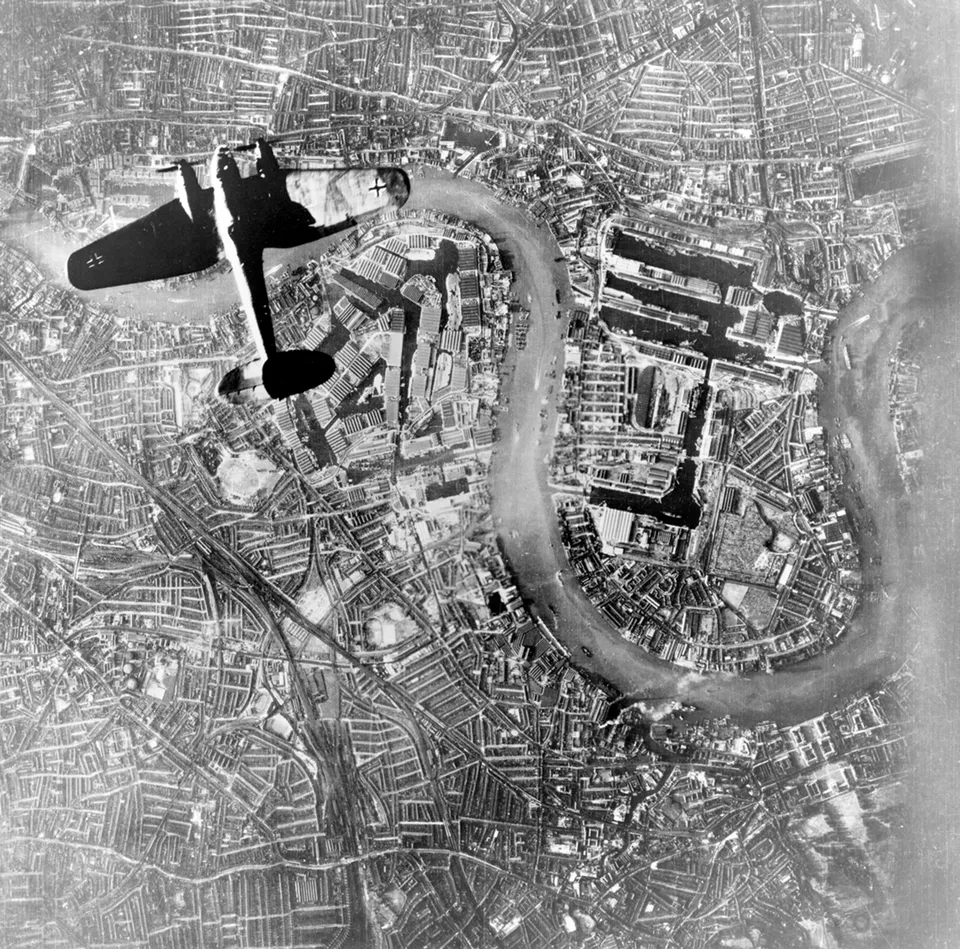
A German Heinkel He 111 bomber over Wapping, East London, on the evening the Blitz began, 7 September 1940

German Air Force photographer · Public domain · Source

With France beaten, Germany prepared to invade Britain (Operation Sea Lion) and from July 1940 sent its air force against RAF airfields and aircraft factories. Britain resisted with its radar chain and Spitfire and Hurricane fighters.

When Germany switched in September to night raids on London and other cities (the Blitz), the RAF recovered, and Germany never won air superiority. Churchill honoured the pilots: “Never in the field of human conflict was so much owed by so many to so few.” It was the first major battle fought entirely in the air.

The map in 1940

OpenFreeMap © OpenMapTiles © OpenStreetMap contributors

States at the time
Great Britain · victor
Germany · defeated
Places
London

People

  • Winston Churchill1874 – 1965

    leader · British prime minister (1940–1945, 1951–1955) who led Britain’s resistance through the Battle of Britain and named the “Iron Curtain” in 1946

Before and after

Earlier
1940 Fall of France

Themes that include this event

  • World War II1939 – 1945

    From the invasion of Poland to the surrender of Japan — the largest war in human history, across Europe, Asia and the Pacific