Balhae Image of Two Buddhas Seated Side by Side
Also called: Two Buddhas Seated Side by Side
A Balhae image of two Buddhas seated side by side. Seen as continuing the Goguryeo tradition, it is cited as evidence that Balhae succeeded Goguryeo.
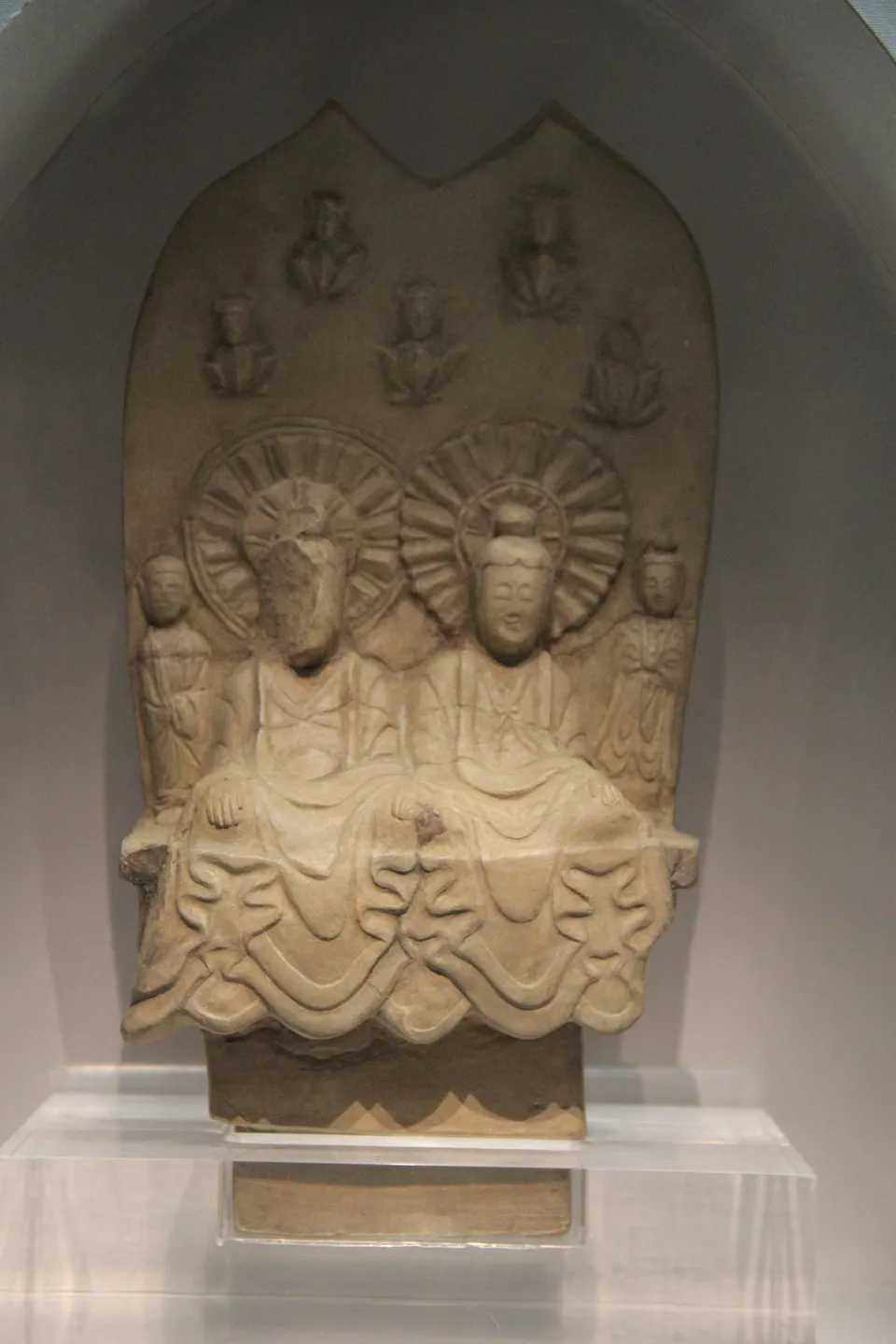
The image shows the Buddhas Sakyamuni and Prabhutaratna seated side by side, a scene from the Lotus Sutra. Several examples have been found in former Balhae lands, including the Baliancheng site in Hunchun, Jilin, thought to be Balhae’s Eastern Capital (Dongyeong Yongwonbu).
The type had been popular in Goguryeo, so Balhae’s images of two seated Buddhas are used as evidence that Balhae’s Buddhist art carried on from Goguryeo. With Princess Jeonghye’s tomb (a stone-chamber tomb with a lantern ceiling), ondol heating and lotus-pattern roof tiles, they appear often in questions on Balhae’s Goguryeo heritage — while Princess Jeonghyo’s brick tomb, the grand avenue of Sanggyeong and the brick Yeonggwang pagoda show Tang influence.