Aurangzeb and the Decline of the Mughal Empire
Also called: Alamgir, Rise of the Marathas
Aurangzeb took the Mughal Empire to its greatest extent, but his strict Islamic policies, including the revival of the jizya, provoked Hindus and Sikhs. After his death the empire quickly fell apart.
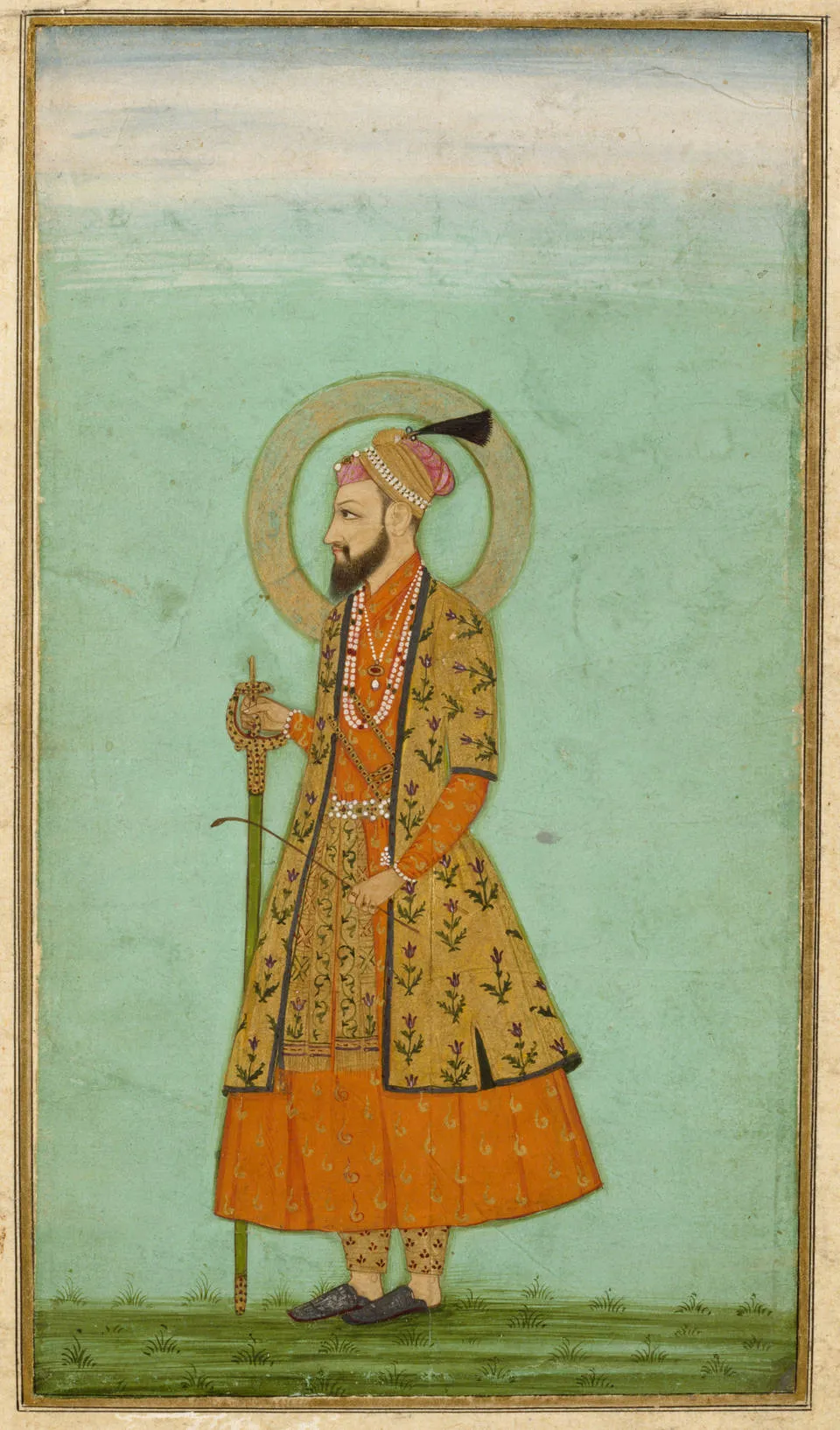
Unknown author · Public domain · Source
When Shah Jahan fell ill his four sons fought for the throne; in 1658 the third, Aurangzeb, defeated his elder brother Dara Shikoh, imprisoned his father and took the throne. A devout Sunni, he set out to rule by Islamic law, reimposed the jizya on non-Muslims in 1679 and pulled down some Hindu temples. In 1675 he had the ninth Sikh Guru, Tegh Bahadur, executed.
He conquered Bijapur (1686) and Golconda (1687) in the Deccan, bringing the empire to its greatest size, but in western India Shivaji founded a Maratha kingdom in 1674 to resist him. Aurangzeb spent his last twenty-five years or so on campaign in the Deccan, draining the treasury, while the Rajputs and Sikhs turned against him. After his death in 1707 provincial governors became independent, the Marathas expanded, and in 1739 Nadir Shah of Iran sacked Delhi. The British and French East India Companies moved into the gap. The year after his accession, Joseon was divided by the Rites Controversy (1659).