Building of the Taj Mahal
The Mughal emperor Shah Jahan built the Taj Mahal, a white marble tomb at Agra, for his late wife Mumtaz Mahal — a masterpiece of Indo-Islamic architecture.
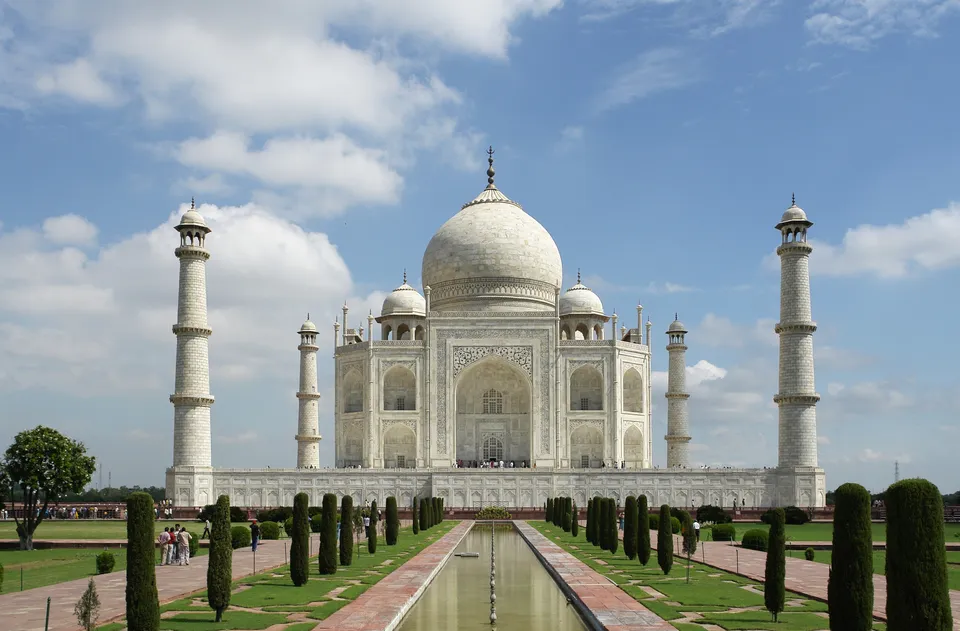
Yann ; edited by Jim Carter · CC BY-SA 4.0 · Source
In 1631 Shah Jahan’s wife Mumtaz Mahal died at Burhanpur, on campaign in the Deccan, giving birth to their fourteenth child. The grieving emperor began building her tomb the next year on the Yamuna at Agra. The mausoleum was finished around 1643 and the gardens and ancillary buildings around 1653; some twenty thousand workers are said to have laboured on it.
The Taj Mahal is a masterpiece of Indo-Islamic architecture, adding Indian chhatri pavilions to Persian and Timurid domes and arches. Its white Rajasthani marble is inlaid with semi-precious stones in floral patterns (pietra dura) and framed with verses of the Quran, and its four-part garden (charbagh) evokes paradise. Shah Jahan also built a new capital at Delhi, Shahjahanabad, with its Red Fort, but his great works strained the treasury; in 1658 his son Aurangzeb confined him in Agra Fort, where he died in 1666. While the Taj Mahal was being built, Joseon suffered the Second Manchu Invasion of 1636.