Ariadne on Naxos
Also called: Bacchus and Ariadne, Corona Borealis
A legend handed down over the centuries.
A Greek myth told by Hesiod’s Theogony, Catullus and Ovid. Ariadne, who left Crete with Theseus, was abandoned on the island of Naxos; the wine god Dionysus found her, made her his wife and set her crown among the stars.
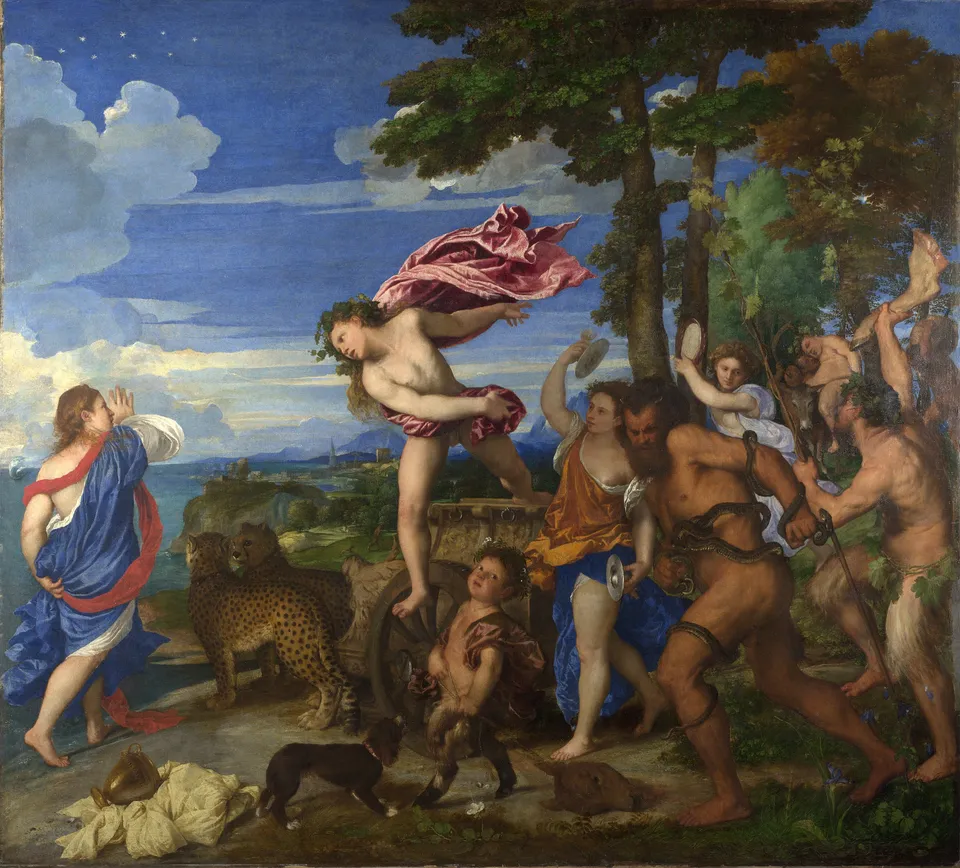
Titian · Public domain · Source
This Greek myth is mentioned in Hesiod’s Theogony, which tells of the marriage of Dionysus and Ariadne, and told at length by Catullus (poem 64) and Ovid (Metamorphoses, Book 8; Art of Love), among others. After killing the Minotaur, Theseus sailed from Crete with Ariadne but left her asleep on the island of Naxos (anciently Dia), where they had put in. Why he abandoned her varies by author: he simply forgot her, or the gods ordered it because Dionysus wanted her.
Dionysus, arriving in a chariot drawn by leopards, found Ariadne grieving on the shore and took her as his wife, and threw the crown he gave her as a wedding gift into the sky, where it became a constellation (Corona Borealis). Book 11 of the Odyssey tells a different story, in which Artemis killed her on Dia at Dionysus’ word. The meeting of the abandoned Ariadne and Dionysus inspired works from Titian’s Bacchus and Ariadne to Richard Strauss’s opera Ariadne auf Naxos.