Founding of the Abbasid Caliphate
Also called: Abbasid Revolution, Battle of the Zab
Descendants of Muhammad’s uncle al-Abbas harnessed the grievances of Persian converts and the Shia to overthrow the Umayyads and found the Abbasid dynasty.
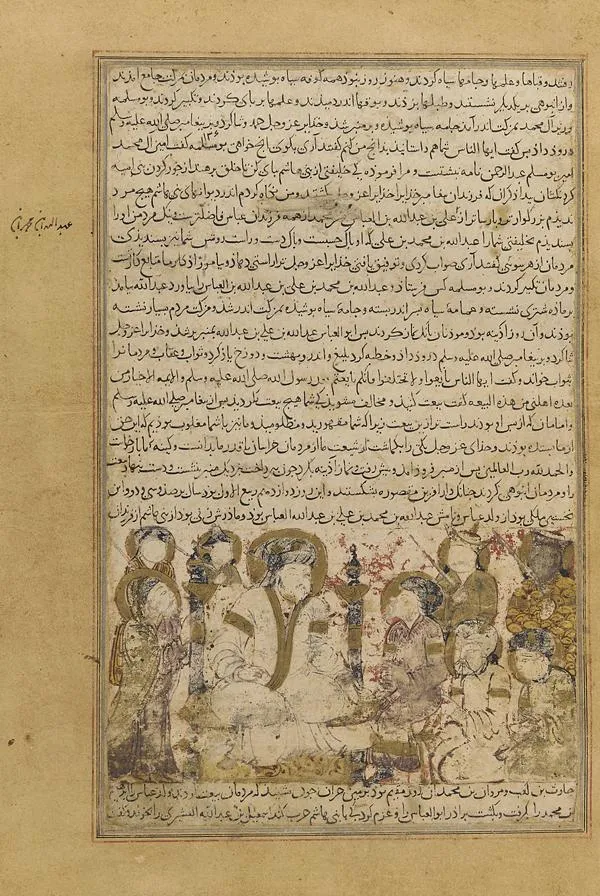
Abu Ali Bal'ami · Public domain · Source
Resentment built up among non-Arab converts, especially Persians, at Umayyad favour to the Arabs, and among the Shia. The descendants of Muhammad’s uncle al-Abbas gathered this discontent, and in 747 Abu Muslim raised the black banners of revolt in Khurasan in the east. In 749 Abu al-Abbas (al-Saffah) was proclaimed caliph at Kufa, and in 750 he defeated the last Umayyad caliph, Marwan II, on the Zab, a tributary of the Tigris. The Umayyad family was all but wiped out, though Abd al-Rahman escaped to Iberia.
The Abbasids made no distinction between Arab and non-Arab Muslims: converts were freed from the poll tax, and Arabs who held land paid the land tax. Persian officials ran the government as viziers, Persian institutions and culture were adopted, and the centre of power moved east to Iraq, where Baghdad was founded. The “Arab empire” is thus said to have become an “Islamic empire” shared by Muslims of many peoples.