Iron Flagpole of Yongdusa Temple Site, Cheongju
Also called: Cheongju Iron Flagpole
In 962, under King Gwangjong, an iron flagpole was raised before Yongdusa temple in Cheongju. Its inscription preserves Gwangjong’s own era name, Junpung.
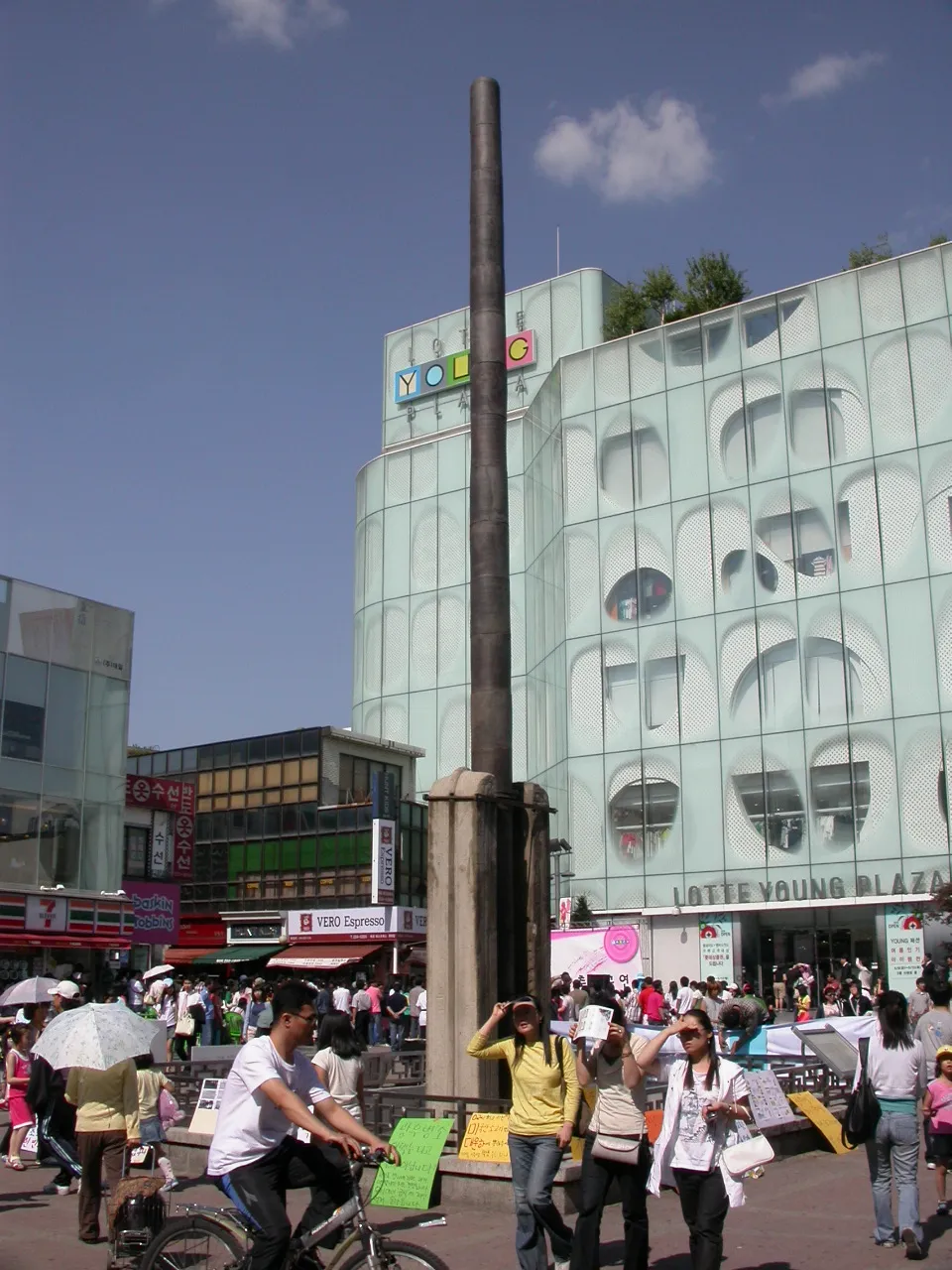
Lawinc82 · CC BY-SA 3.0 · Source
A dangan is the tall pole set before a Buddhist temple to hang a banner. The Yongdusa flagpole is a stack of iron cylinders held between two stone posts; 20 of the original 30 cylinders remain. An inscription on the third cylinder from the bottom records that local leaders of Cheongju, Kim Ye-jong and Kim Hui-il among them, raised it in "the 3rd year of Junpung (962)".
Gwangjong used his own era names, Gwangdeok and then Junpung, styling Goryeo an empire and calling Gaegyeong the imperial capital. The inscription is rare evidence that the era name was actually used in the provinces. The temple is gone; only the flagpole remains, in the middle of downtown Cheongju, and it is a National Treasure.