The Wrath of Achilles and the Death of Hector
Also called: Iliad, Death of Hector, Death of Patroclus
A legend handed down over the centuries.
A Greek myth sung in Homer’s Iliad. In the tenth year of the war Achilles, insulted by Agamemnon, withdraws from battle; when his friend Patroclus is killed by Hector he returns and kills Hector, and Priam, king of Troy, comes to ransom his son’s body.
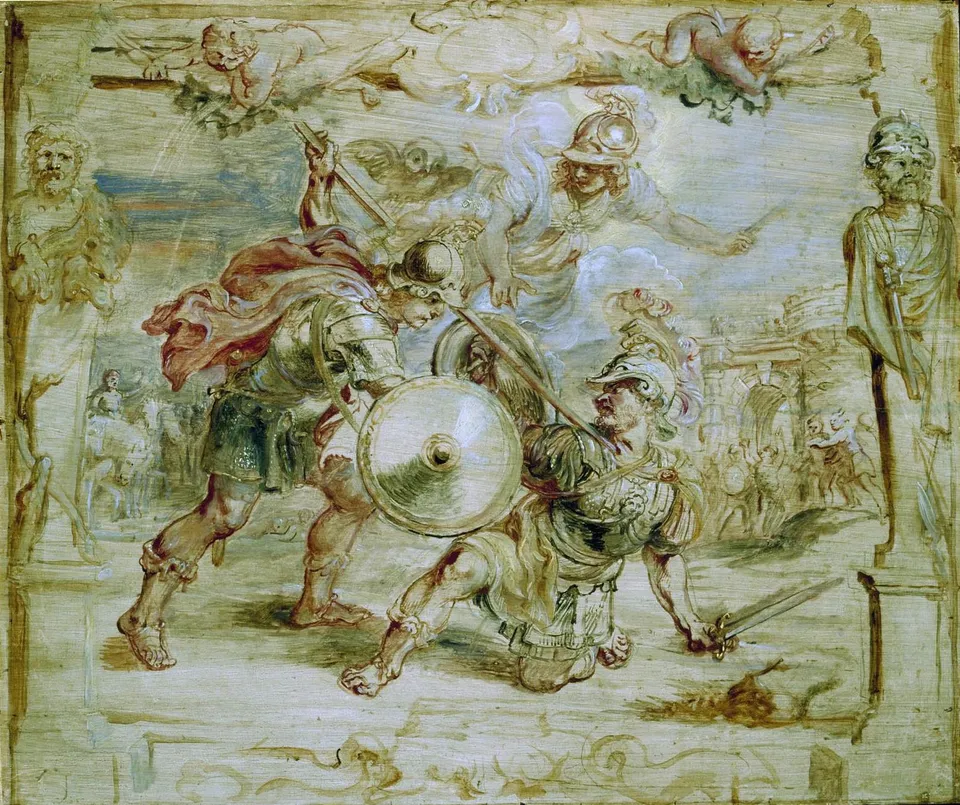
Peter Paul Rubens · Public domain · Source
This Greek myth is sung in Homer’s Iliad (24 books, some 15,700 lines). The Iliad covers only about fifty days in the last of the ten years of the Trojan War, and its first line is “Sing, goddess, the wrath of Achilles son of Peleus”. When the commander Agamemnon took Briseis, the woman awarded to Achilles, Achilles withdrew from the fighting, and the Greeks were driven back to their ships by the Trojans under Hector.
When his friend Patroclus, fighting in Achilles’ armour, was killed by Hector (Book 16), Achilles turned his rage on Hector, killed him and dragged his body behind his chariot (Book 22). In the last book the old Trojan king Priam comes secretly to Achilles’ tent to beg for his son’s body, and the two men weep together. The Iliad ends with Hector’s funeral; it does not tell of the fall of Troy or the wooden horse.