Wall Street Crash (Black Thursday)
Also called: Black Thursday, Black Tuesday, Crash of 1929
Share prices on the New York Stock Exchange began to plunge on 24 October 1929 and collapsed on “Black Tuesday”, the 29th — the starting point of the Great Depression.
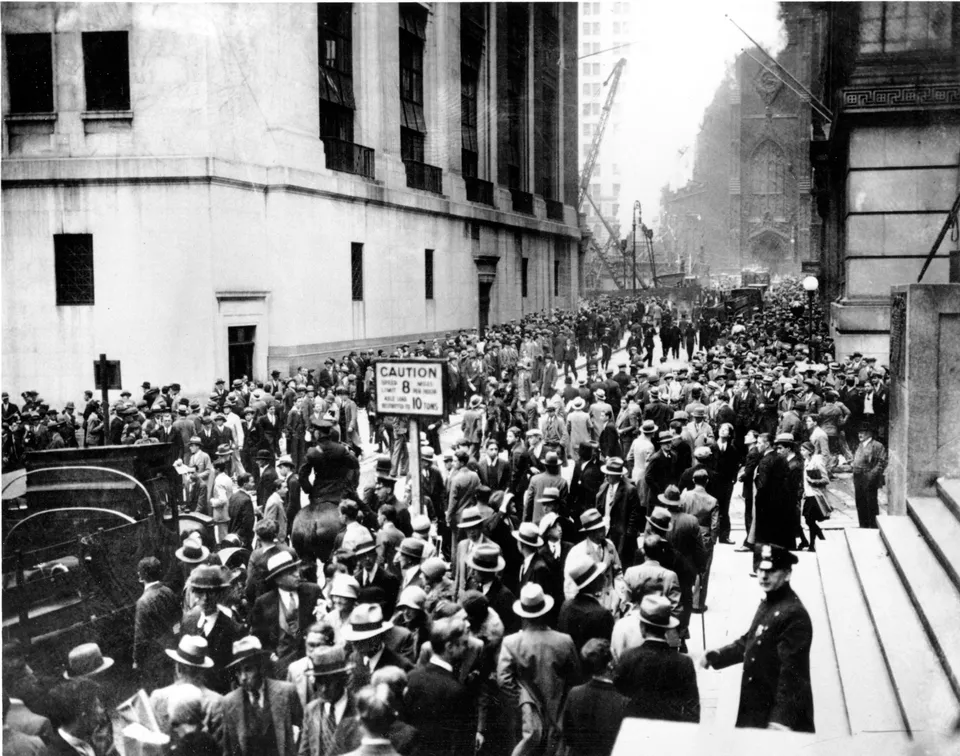
Associated Press · Public domain · Source
In the late 1920s a craze for buying shares with borrowed money swept America, lifting the Dow Jones Industrial Average to 381 in September 1929. On Thursday 24 October a flood of sell orders saw nearly 13 million shares change hands, and the big banks barely held the line by pooling funds to buy stock. On Monday 28 and Tuesday 29 October the fall resumed, and tens of billions of dollars in value vanished within days.
Prices kept sliding until by July 1932 they stood at little more than a tenth of their peak. As people who had lost shares and savings cut their spending and banks failed in succession, the financial crisis spread into the real economy. President Hoover, expecting a quick recovery, was criticized for being slow to intervene.