Virgil’s Aeneid
Also called: Aeneid, Aeneis
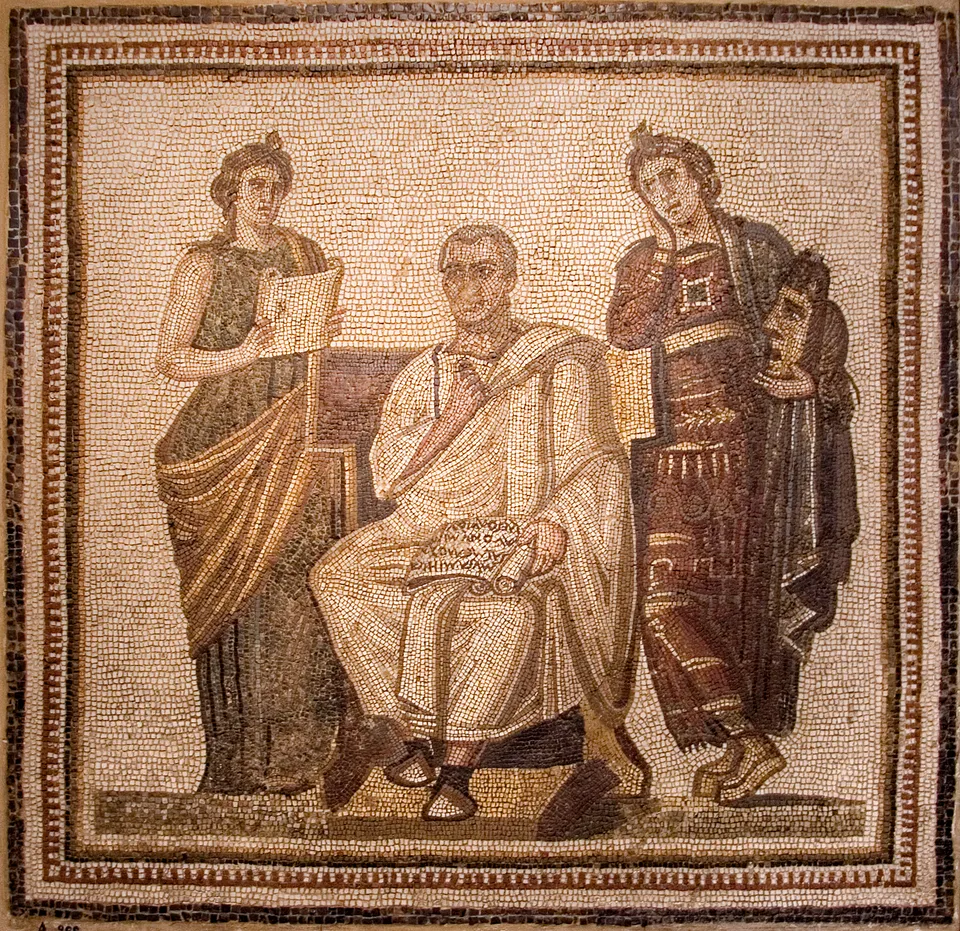
From about 29 BC, after Augustus had ended the civil wars, the poet Virgil composed the Aeneid, an epic in twelve books on how the Trojan Aeneas came to Italy and laid the roots of Rome. When Virgil died in 19 BC with the poem unfinished, Augustus had it published as it stood.
David Bjorgen · Public domain · Source
Having made his name with the Eclogues and the Georgics, Virgil devoted the last ten years of his life, from about 29 BC, to the Aeneid. Modelled on Homer, its first six books tell of wandering like the Odyssey and its last six of war like the Iliad — twelve books, about 9,900 lines, opening with “I sing of arms and the man.” He wrote mostly in Naples, and Augustus was eager to see drafts while it was in progress; according to an ancient biography, Virgil read Books 2, 4 and 6 to Augustus and his sister Octavia.
The poem links the Julian family — which claimed Aeneas’ son Iulus as its ancestor, and thus Augustus — to Troy and Venus, and through the prophecies of the underworld in Book 6 and the pictures on Aeneas’ shield in Book 8 (the Battle of Actium) presents the Augustan age as the summit of Rome’s destiny. At the same time, through the tragedies of Dido and Turnus, it shows the cost of building an empire.
In 19 BC, travelling to Greece to revise the poem, Virgil fell ill and died in September at Brundisium (Brindisi). He had asked for the manuscript to be burned, but Augustus had his friends Varius and Tucca publish it with few changes, which is why some lines remain incomplete. The Aeneid soon became a school text in Rome and shaped Western literature — Dante took Virgil as his guide in the Divine Comedy.