Urabi Revolt and the British Occupation of Egypt
Also called: ʻUrabi Revolution, Anglo-Egyptian War
The officer Ahmed Urabi rose against foreign interference and the khedive under the slogan "Egypt for the Egyptians" but was crushed by British troops. Egypt became a British protectorate in all but name.
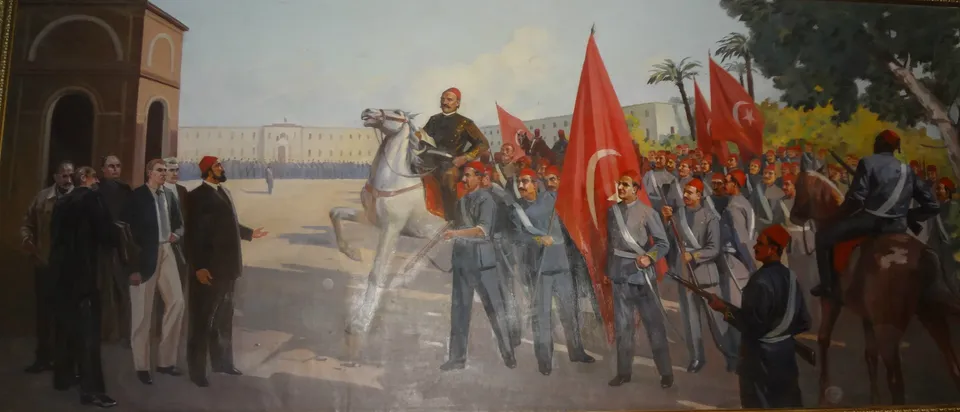
Ahmed yousri elmamlouk · CC BY-SA 4.0 · Source
Buried in debt by the Suez Canal and its modernizing projects, Egypt had been under Anglo-French financial control since 1876. With Europeans steering the government and Egyptian officers facing discrimination, on 9 September 1881 Ahmed Urabi led troops to Abdeen Palace in Cairo and demanded from Khedive Tawfiq a new cabinet, a constitution and a parliament. The next year he became minister of war.
Britain, determined to protect the canal and its bondholders, bombarded Alexandria on 11 July 1882, landed troops and defeated Urabi at Tel el-Kebir on 13 September. Urabi was exiled to Ceylon, and Egypt, still formally part of the Ottoman Empire, became a British protectorate in all but name (formally in 1914). The revolt is seen as the beginning of the Egyptian national movement.