The Nine-Yearly Sacrifice at Uppsala
Also called: Uppsala sacrifice, Blót at Uppsala
A legend handed down over the centuries.
The sacrifice at Uppsala as told from hearsay by Adam of Bremen. Every nine years people from all over Sweden gathered at Uppsala for a nine-day feast, offering nine males of every kind of creature — humans included — and hanging their bodies in the trees of a sacred grove.
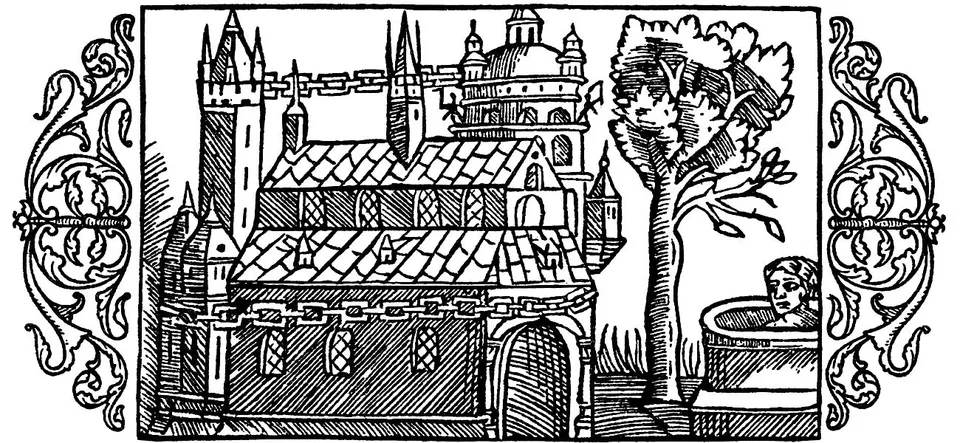
Olaus Magnus · Public domain · Source
This account comes from the fourth book of Adam of Bremen’s history of the archbishops of Hamburg-Bremen (c. 1075) and the notes in its margins. Adam did not see it himself; he writes that a Christian aged seventy-two told him he had seen dogs and horses hanging in the trees together with men. Every nine years, he says, people from all the provinces of Sweden gathered at Uppsala for the sacrifice, and even Christians had to pay to be excused.
Nine males of every living creature were offered, their blood used to appease the gods, and their bodies hung in the grove beside the temple, every tree of which was held sacred. Nearby stood a great tree green in summer and winter, and a spring into which a living man was thrown; if he did not come up, the people’s wish would be granted. A marginal note adds that the feast lasted nine days, with a man offered each day along with other creatures, seventy-two in all.
The victims hanging in trees recall Odin hanging on the tree in Hávamál, but Adam was a cleric with reasons to paint paganism darkly, and nothing in his numbers or scenes has been confirmed by archaeology. Whether humans really were sacrificed is debated.