Rebellion of Túpac Amaru II
Also called: Túpac Amaru Rebellion, Great Rebellion of 1780
Túpac Amaru II, who claimed descent from the Inca rulers, led a great indigenous uprising in Peru against Spanish exploitation. It was crushed, but it was the largest revolt of the colonial era.
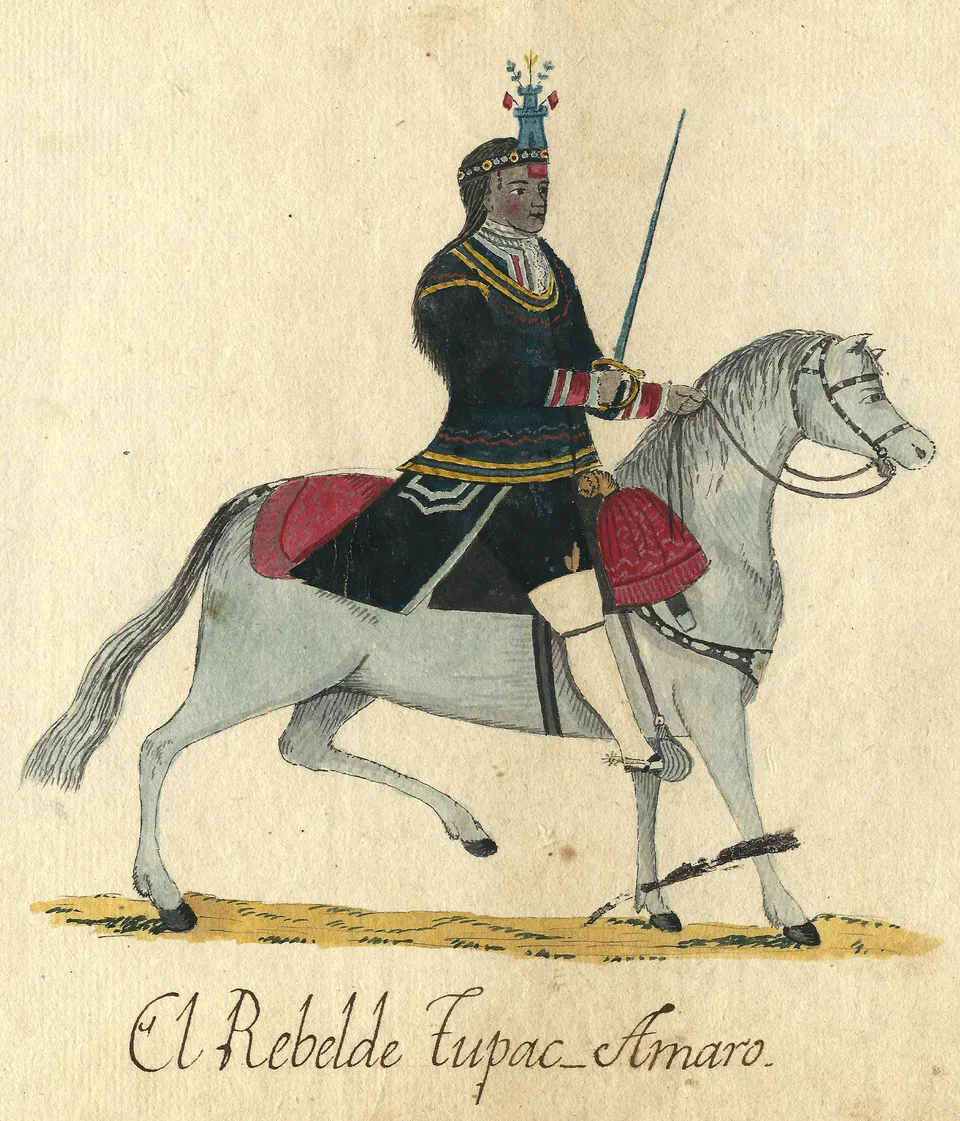
Unknown author · Public domain · Source
In the 18th century Spain’s Bourbon kings raised colonial taxes, while officials (corregidores) continued to force goods on native people at inflated prices and forced labour in the mines (the mita) went on. On 4 November 1780 the indigenous leader José Gabriel Condorcanqui, styling himself Túpac Amaru II, seized and executed a corregidor and rose in revolt. The rising spread through the southern Andes but failed to take Cusco; he was captured in 1781 and executed in the main square of Cusco on 18 May together with his wife Micaela Bastidas. Fighting went on until about 1782. In 1780 Pak Ji-won of Joseon travelled to the Qing and wrote his Yeolha Diary.