The Three Administrations and the Mitsuya Agreement
Independence forces in Manchuria regrouped into the Chamuibu, Jeonguibu and Sinminbu, governing Korean settlers and continuing the armed struggle. Japan tried to stop them with the Mitsuya Agreement.
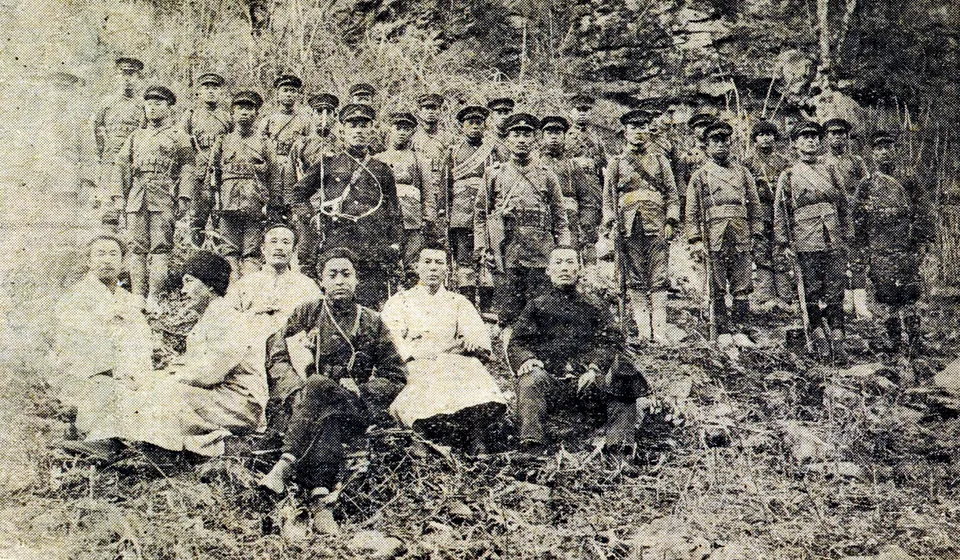
Unknown author · Public domain · Source
The Chamuibu across the Yalu (1923, directly under the Provisional Government), the Jeonguibu in southern Manchuria (1924) and the Sinminbu in northern Manchuria (1925) each had civil and military organs and taxed Korean settlers, acting as self-governments.
In 1925 the Government-General’s police chief Mitsuya and the warlord Zhang Zuolin agreed that Chinese officials would arrest independence fighters and hand them to Japan for bounties. As operations became harder, a unification movement merged the groups into the Revolutionary Council in the north (1928; later the Korean Independence Party and Army) and the Gungminbu in the south (1929; the Korean Revolutionary Party and Army).