Tangshan Earthquake
Also called: 1976 Tangshan earthquake, Great Tangshan Earthquake
Before dawn on 28 July 1976 an earthquake of magnitude 7.6 (7.8 on the Chinese scale) struck Tangshan in Hebei, levelling almost the entire city. The official death toll is 242,419, and some estimates put it higher.
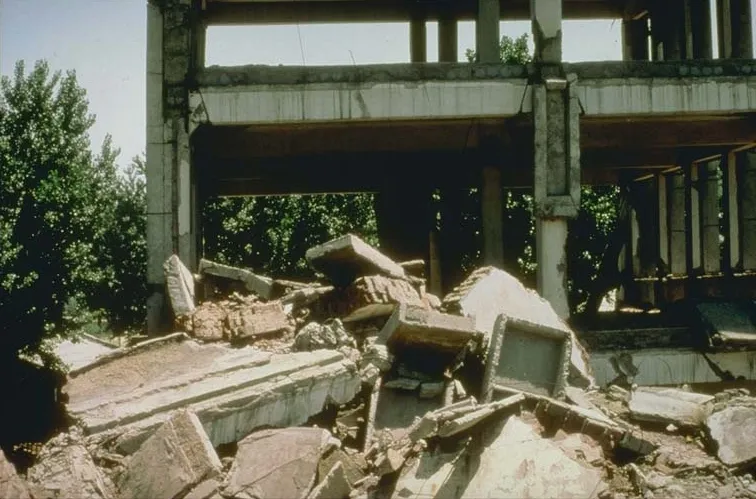
the National Oceanic and Atmospheric Administration · Public domain · Source
At 3:42 a.m. on 28 July a powerful earthquake struck directly beneath Tangshan. People were asleep, and most brick houses and factories collapsed, turning an industrial city of about a million people into ruins within seconds. A major aftershock of around magnitude 7 followed that afternoon, and there was damage in Beijing and Tianjin as well.
The Chinese government refused offers of foreign aid and sent more than 100,000 soldiers to carry out rescue work. Officially 242,419 people died and more than 160,000 were seriously injured, making it one of the deadliest earthquakes of the twentieth century. Some believe the true toll was higher than the official figure — some researchers suggest over 300,000, and early foreign estimates ran as high as 655,000.
Coming six weeks before Mao’s death, the disaster was seen by some as an omen that the Mandate of Heaven was passing. The city was rebuilt on the same site and now has a memorial park on the earthquake ruins and a museum. The quake led China to tighten its building codes for earthquake resistance.