Taejong Strengthens Royal Power
Taejong abolished private armies and had the Six Ministries report directly to the king; he introduced the hopae identity tag and set up the petition drum (sinmungo).
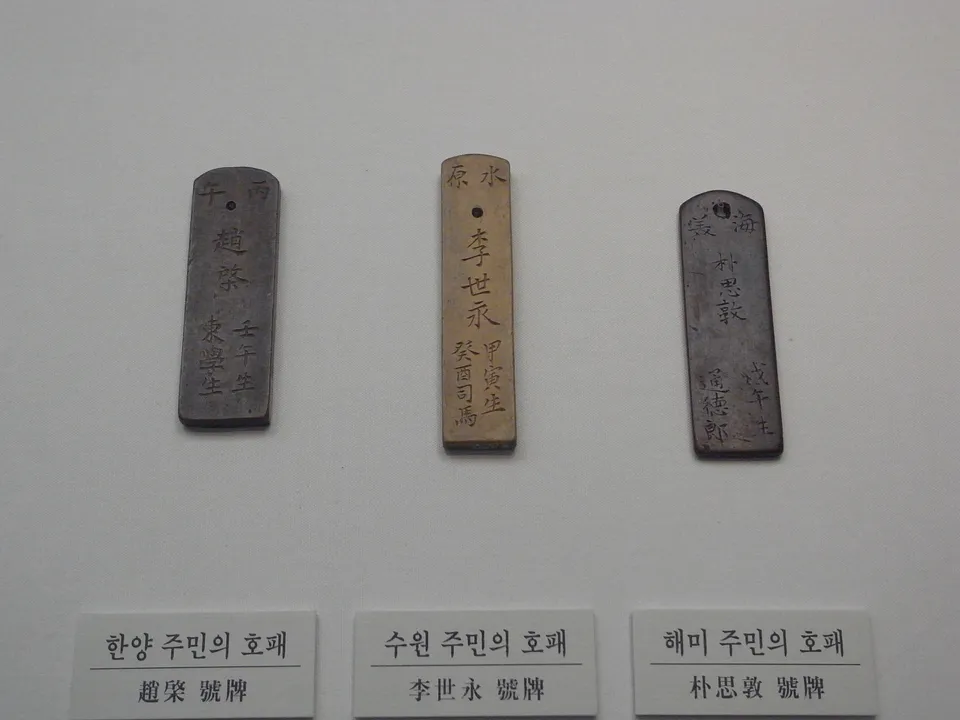
Eggmoon · CC BY-SA 3.0 · Source
As crown prince in 1400, Yi Bang-won abolished the private armies of princes and merit subjects and replaced the Dopyeong uisasa council with the State Council (Uijeongbu). As king he set up the sinmungo drum for petitions (1401), required every man over sixteen to carry an identity tag (hopae law, 1413), and let the Six Ministries report straight to the throne, bypassing the State Council (1414). He resurveyed land and confiscated the estates and slaves of Buddhist temples.
Sejong switched to having the State Council review ministry business first, strengthening the chief ministers; Sejo restored direct reporting. Textbooks contrast direct reporting (royal power) with State Council review (balance between king and officials).
