Unification of the Ryukyu Kingdom and Its Entrepôt Trade
Also called: Ryukyu Kingdom, Sanzan unification, Bankoku Shinryō
Shō Hashi of Chūzan unified Ryukyu, long divided among three Okinawan kingdoms, in 1429 and made Shuri his capital. As a Ming tributary, Ryukyu prospered on entrepôt trade linking China, Japan, Korea and Southeast Asia.
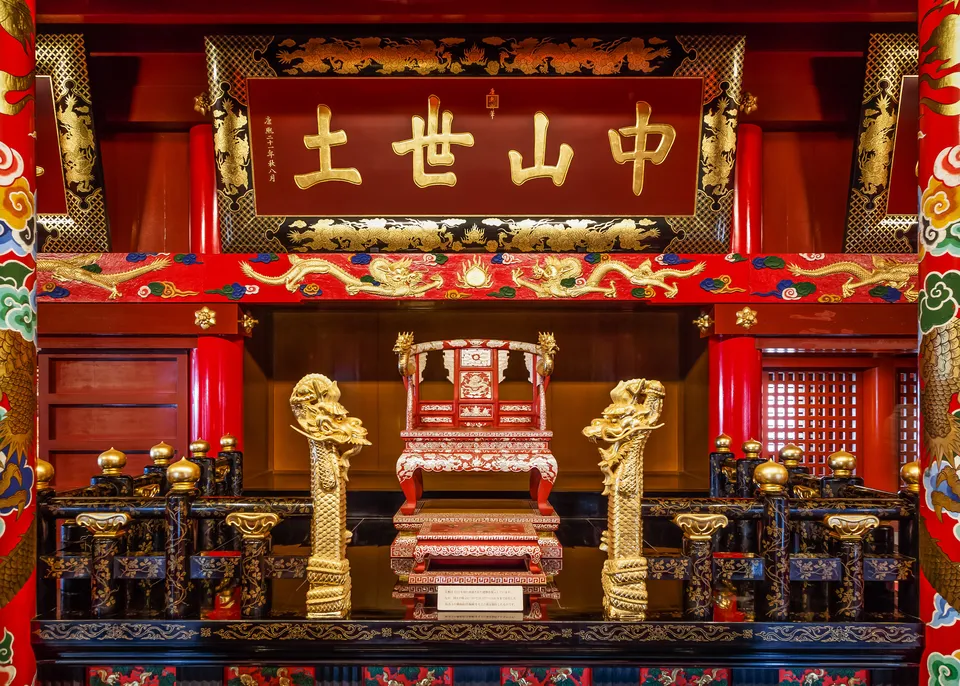
CEphoto, Uwe Aranas · CC BY-SA 3.0 · Source
In the 14th century three powers — Hokuzan, Chūzan and Nanzan — contended on Okinawa, and from 1372, beginning with Chūzan, all three sent tribute to the Ming. Shō Hashi of Chūzan destroyed Hokuzan in 1416 and Nanzan in 1429, uniting Ryukyu with Shuri Castle as his palace (the First Shō dynasty).
When the Ming banned private sea trade, Ryukyu, with its tribute privileges, filled the gap. It sold Chinese silks and porcelain in Japan, Korea, Siam, Malacca and Java and passed Southeast Asian pepper and sappanwood on to China and Japan, growing rich on this entrepôt trade. A bell hung in the main hall of Shuri Castle in 1458 proclaims Ryukyu “a bridge between nations” (Bankoku Shinryō). After the Satsuma invasion of 1609 it answered to both Qing China and Japan, until Japan annexed it in 1879 (the Ryukyu Disposition).
Ryukyu first sent envoys to Goryeo in 1389, and in early Joseon it sent missions several times bearing local products and Southeast Asian goods.