The Rebirth of the World
Also called: Renewal of the world, Líf and Lífþrasir, Gimlé
A legend handed down over the centuries.
A Norse myth told at the end of Völuspá, in Vafþrúðnismál and in Snorri’s Prose Edda. After Ragnarök a green earth rises again from the sea, surviving gods and Baldr, returned from the dead, gather in the new world, and Líf and Lífþrasir, who hid in a wood, become ancestors of a new humankind.
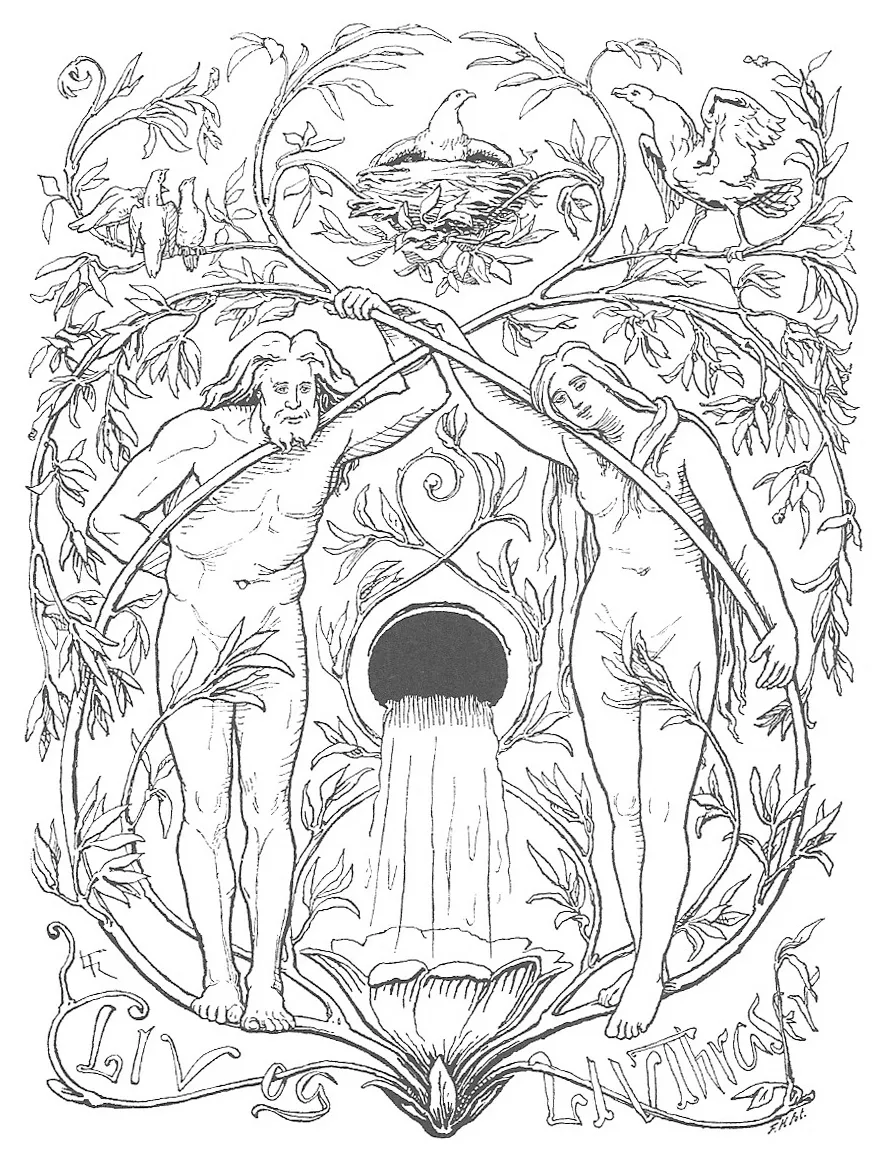
Lorenz Frølich · Public domain · Source
This Norse myth is told at the end of Völuspá and in Vafþrúðnismál in the Poetic Edda, and in Gylfaginning of Snorri Sturluson’s Prose Edda. The seeress sees the earth rise again, ever green, from the sea; waterfalls flow, an eagle flies over them hunting fish, and unsown fields bear grain.
Odin’s sons Víðarr and Váli and Thor’s sons Móði and Magni survive and inherit their father’s hammer Mjölnir. Baldr and Höðr, who killed him, return from the underworld reconciled, and the gods find in the grass the golden game pieces of old and talk over what has passed. According to Vafþrúðnismál and Snorri, two people, Líf and Lífþrasir, hide in the wood of Hoddmímir, survive the flames on morning dew and become ancestors of new generations.
Völuspá also sings of Gimlé, a hall roofed with gold brighter than the sun, where the righteous will rejoice forever, and of “the mighty one” who comes from above. Some scholars see here the influence of the Christian new heaven and new earth or the Last Judgement.