Puritan Revolution
Also called: English Civil War, English Revolution, Commonwealth of England, Restoration
In 1642 civil war broke out between Parliamentarians and Royalists; Parliament’s side under Cromwell won, executed Charles I in 1649 and set up a republic. This English revolution lasted until the monarchy was restored in 1660.
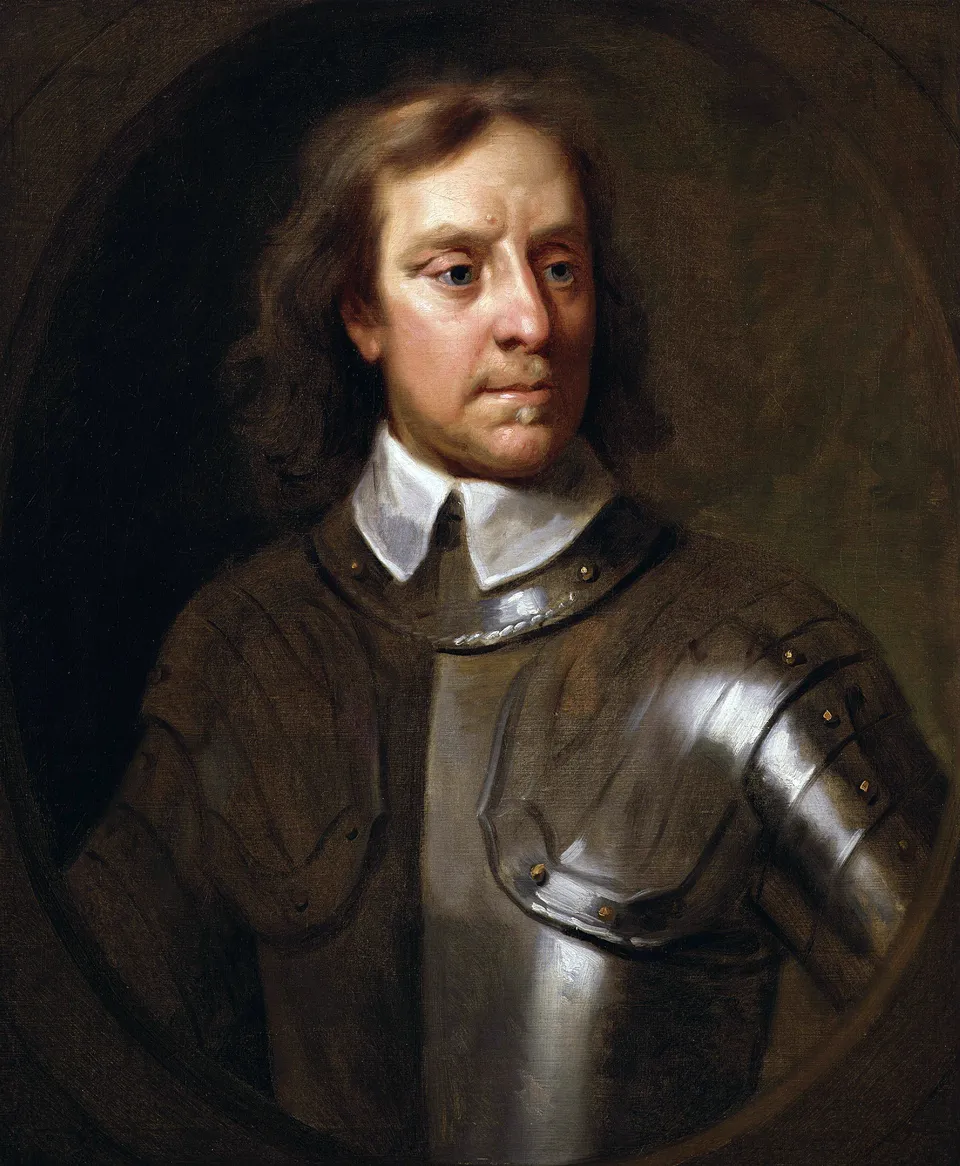
After Samuel Cooper · Public domain · Source
Ruling without Parliament, Charles I tried to impose Church of England worship on Scotland; when the Scots rebelled he reopened Parliament in 1640 to raise money for war. The Long Parliament denounced the king’s misrule, and when he raised an army in August 1642 civil war began. Against the Royalists, centred on the nobility and Anglicans, stood the Parliamentarians — gentry and merchants, many of them Puritans.
Parliament’s Oliver Cromwell, leading his Ironsides and the New Model Army, crushed the Royalists at Naseby in 1645. The Independents, having purged the Presbyterians from Parliament, executed Charles I in 1649, abolished the monarchy and the House of Lords and proclaimed a republic, the Commonwealth. Cromwell conquered Ireland and Scotland — in Ireland the massacres at Drogheda and Wexford and the confiscation of Catholic land left a lasting bitterness — and in 1651 the Navigation Act, aimed at the Dutch carrying trade, led to the Anglo-Dutch Wars. Dissolving Parliament in 1653 and becoming Lord Protector, he ruled as a military dictator, enforcing strict Puritan morals.
After Cromwell died in 1658 the republic faltered, and in 1660 Parliament invited Charles II back: the Restoration. The Puritan Revolution failed, but it left the principle that England could not be ruled without Parliament, preparing the way for the Glorious Revolution.