Founding of the Pahlavi Dynasty
Also called: Pahlavi dynasty, Reza Shah’s reforms
The soldier Reza Khan, having seized power in a coup, had parliament depose the Qajar dynasty and made himself shah, founding the Pahlavi dynasty and driving modernization from above.
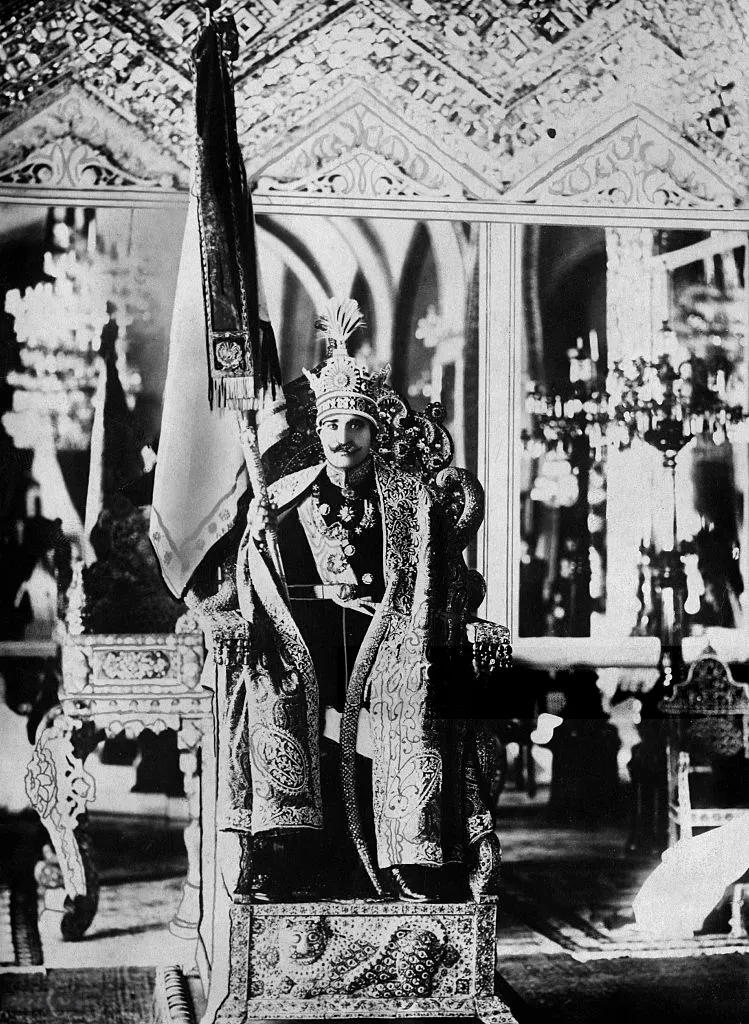
Unknown author · Public domain · Source
Even after the Constitutional Revolution, Iran was shaken by British and Russian interference and provincial revolts. Reza Khan, an officer of the Persian Cossack Brigade, seized Tehran in a coup in February 1921 and consolidated power as war minister and then prime minister. He first planned a republic on the Turkish model but met clerical opposition; on 31 October 1925 parliament deposed the Qajars and then raised Reza Khan to the throne.
Reza Shah built a standing army, laid the Trans-Iranian Railway, founded Tehran University and introduced Western law codes and dress, pursuing a top-down modernization modelled on Kemal’s. In 1935 he had foreign governments use the name "Iran", and the next year he banned the women’s veil. His dictatorship and coercive reforms provoked resentment, and when Britain and the Soviet Union entered Iran during the Second World War over his closeness to Germany, he abdicated in 1941 in favour of his son Mohammad Reza.