Nuremberg Trials
Also called: International Military Tribunal
An international military tribunal set up by the US, Britain, France and the Soviet Union tried the leaders of Nazi Germany for aggressive war, war crimes and crimes against humanity; twelve were sentenced to death.
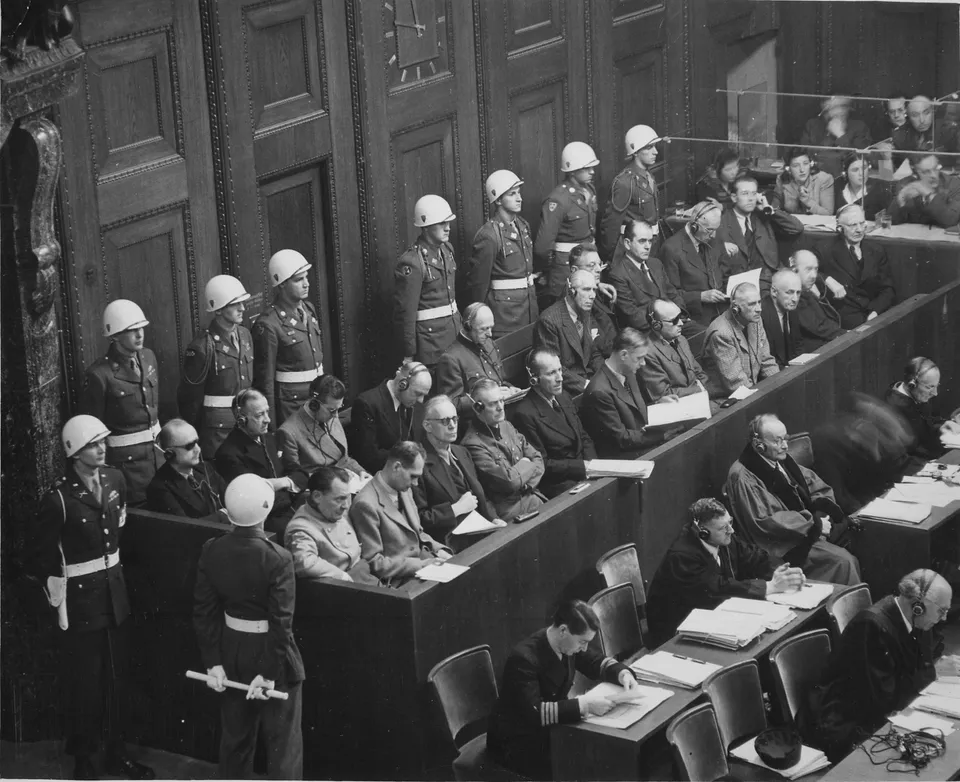
Ray D'Addario · Public domain · Source
After the war the four occupying powers created the International Military Tribunal by the London Agreement (August 1945) and opened proceedings on 20 November 1945 in the Palace of Justice at Nuremberg, the city of the Nazi party rallies. Twenty-two defendants, among them Göring, Hess and Ribbentrop, were tried for crimes against peace (planning and waging aggressive war), war crimes and crimes against humanity.
In the verdict of 1 October 1946 twelve (one in absentia) were sentenced to death, seven to prison, and three were acquitted. Göring killed himself the night before the executions, and ten men were hanged on 16 October. The United States then held twelve subsequent trials of doctors, jurists, industrialists and others. By holding individuals responsible under international law, the trials, together with the Tokyo trial of Japanese leaders, laid the foundation for later international criminal justice.