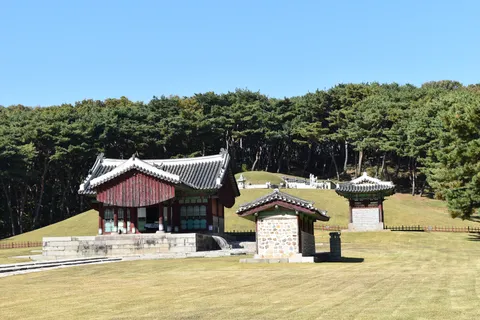
Namhansanseong Fortress, Gwangju
A mountain fortress rebuilt under King Injo to guard the capital from the south. King Injo held out here for 47 days in the Second Manchu Invasion; it became a World Heritage Site in 2014.
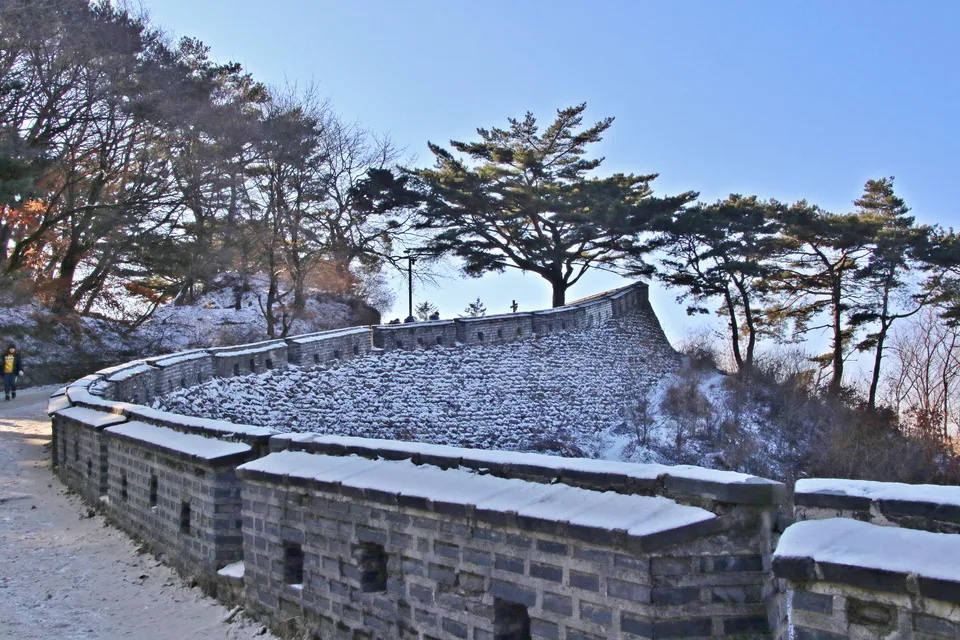
Noh Mun Duek · CC BY-SA 4.0 · Source
Namhansanseong follows the rugged ridges of Namhansan, southeast of Seoul, on the site of Jujangseong, a fortress of King Munmu of Silla. After Yi Gwal’s Rebellion showed the need for a refuge for the capital, King Injo had it largely rebuilt from 1624 to 1626 and set up the Sueocheong garrison to hold it. Monks such as Gakseong were mobilized for the work, and inside the walls stood a temporary palace for the king in emergencies and Buddhist temples.
In the Second Manchu Invasion of 1636, finding the road to Ganghwa cut, King Injo took refuge here and held out for 47 days before going out to surrender at Samjeondo in 1637. The walls were further strengthened under Sukjong and Jeongjo, and command posts, barbicans and gun emplacements show late-Joseon fortification techniques. The area inside the walls was run as a fortress town.
Recognized for the exchange of fortification techniques in East Asia from the 17th century and as a fortress town serving as an emergency capital, it became a UNESCO World Heritage Site in 2014.