Bombing of Korean Air Flight 858
Also called: KAL 858 bombing
Korean Air Flight 858 from Baghdad to Seoul was destroyed over the Andaman Sea by a bomb left by North Korean agents, killing all 115 people aboard.
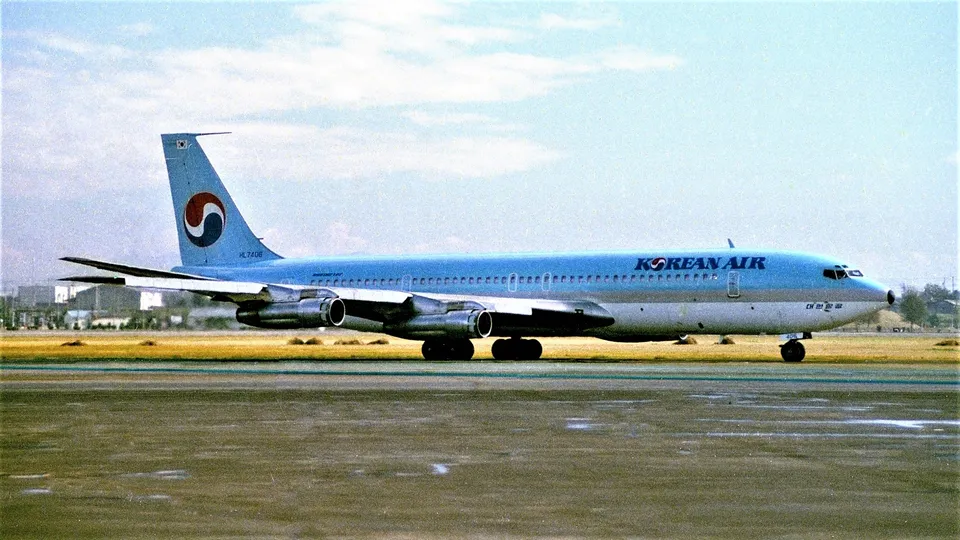
ハミングバードさん · CC BY-SA 4.0 · Source
On 29 November 1987 Korean Air Flight 858, a Boeing 707 flying from Baghdad to Seoul via Abu Dhabi and Bangkok, was blown up over the Andaman Sea off Myanmar. All 115 passengers and crew — many of them workers returning from construction sites in the Middle East — were killed.
Two people posing as a Japanese father and daughter, who had left the plane at Abu Dhabi, were caught in Bahrain; Kim Seung-il died after taking poison and Kim Hyon-hui was brought to Seoul. She stated that she had left the bomb on North Korean orders to disrupt the Seoul Olympics, and the government announced that North Korea was responsible; the North denied any involvement. In January 1988 the United States designated North Korea a state sponsor of terrorism (removed in 2008, re-listed in 2017).