Reign of Justinian
The Byzantine emperor Justinian recovered former Western Roman lands such as North Africa and Italy and issued the Corpus Juris Civilis, seeking to restore the Roman Empire.
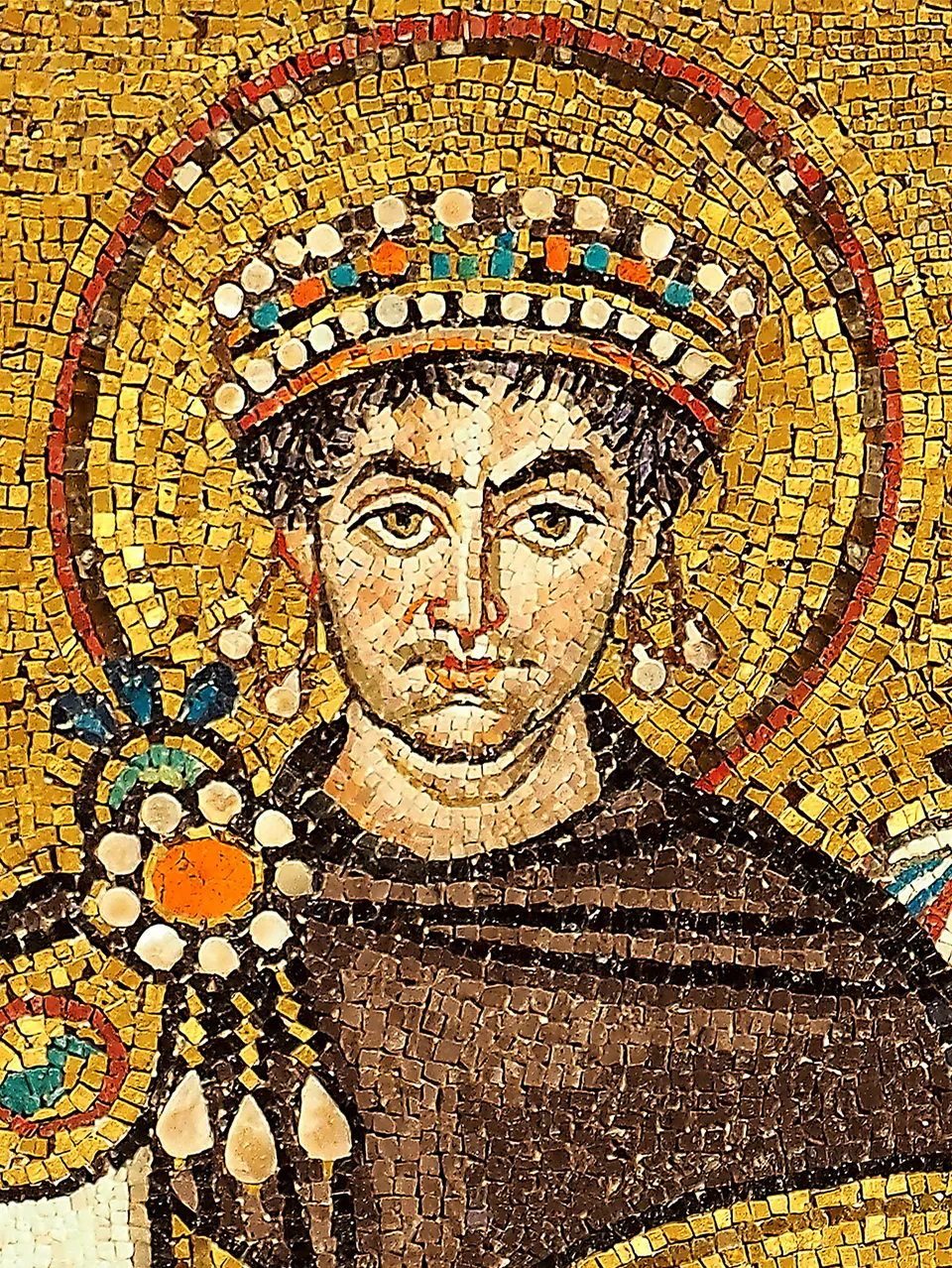
Petar Milošević · CC BY-SA 4.0 · Source
After the fall of the West, the Eastern Roman (Byzantine) Empire carried on the Roman tradition from Constantinople. Justinian I, who came to the throne in 527, aimed at “one empire, one law, one church” and sought to make the Mediterranean a Roman sea once more. In 532 he survived the Nika riots in the capital, persuaded by Empress Theodora to stand firm, and crushed them to secure his power.
His general Belisarius destroyed the Vandal kingdom in North Africa in 533–534, and from 535, after nearly twenty years of war, the Ostrogothic kingdom in Italy was overthrown. Southern Spain was also taken from the Visigoths. Justinian had Tribonian and others gather and order Roman laws and the opinions of the jurists into the Corpus Juris Civilis (Code of Justinian, 529–534), which later became the basis of civil law in many European countries. Hagia Sophia was also rebuilt in his reign.
Long wars and the plague that spread from 541 greatly weakened the empire, however, and after his death the Lombards entered Italy in 568 and much of the recovered land was lost again. At the same time Silla was growing rapidly, as King Beopheung recognised Buddhism (527) and King Jinheung seized the Han River basin (553).