Jenner’s Smallpox Vaccination
Also called: Smallpox vaccine, Vaccination, Cowpox
In 1796 the English physician Edward Jenner showed by experiment that inoculating people with cowpox could protect them from smallpox — the beginning of vaccines.
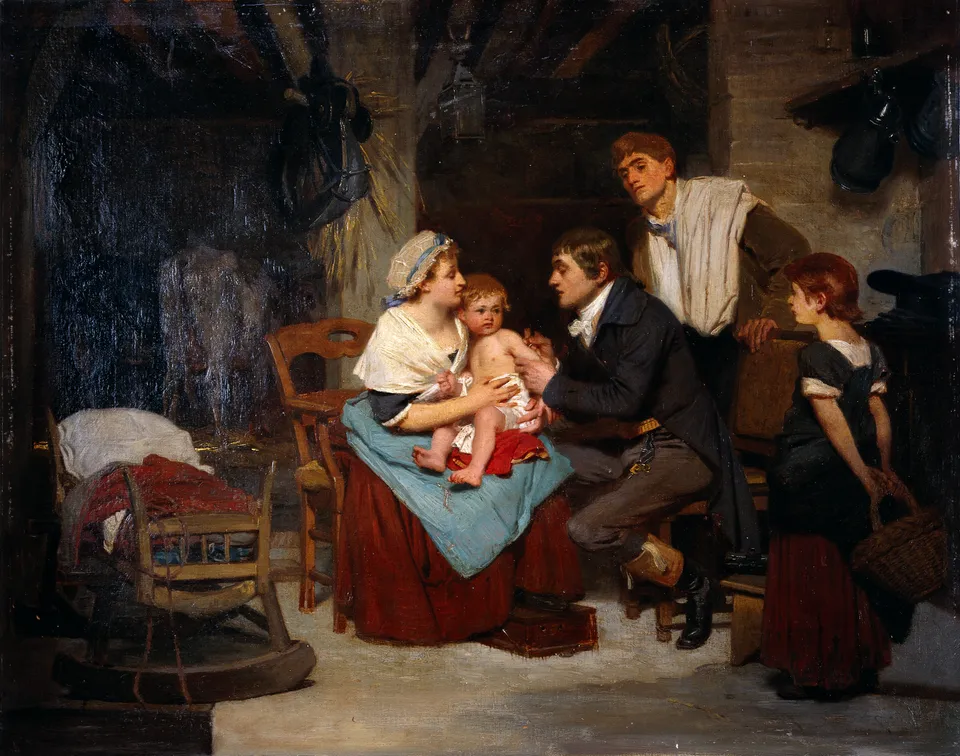
Smallpox was a terrible disease that killed about 30 per cent of those it struck. Early in the 18th century variolation — inoculation with matter from smallpox sores — reached Britain from the Ottoman Empire, but some of those inoculated fell ill and died. Jenner, a country doctor, took note of the saying that milkmaids who had caught the mild cowpox did not catch smallpox.
On 14 May 1796 Jenner inoculated eight-year-old James Phipps with matter from a milkmaid’s cowpox sores, and later confirmed that inoculation with smallpox matter no longer made him ill. When he published his results in 1798, vaccination spread rapidly around the world; the very word vaccine comes from the Latin vacca, “cow”. In 1980 the World Health Organization declared smallpox eradicated.
In Joseon, Jeong Yak-yong wrote the Magwa hoetong (1798) on measles and studied inoculation, and in 1879 Ji Seok-yeong learned cowpox vaccination at a Japanese naval hospital in Busan, first vaccinated people in Chungju and later published Udu sinseol.