Italian Renaissance
Also called: Renaissance, Humanism
From the late 14th to the early 16th century, a humanist culture that revived the culture of ancient Greece and Rome and put humanity at the centre flourished in the cities of Italy, under the patronage of the Medici of Florence.
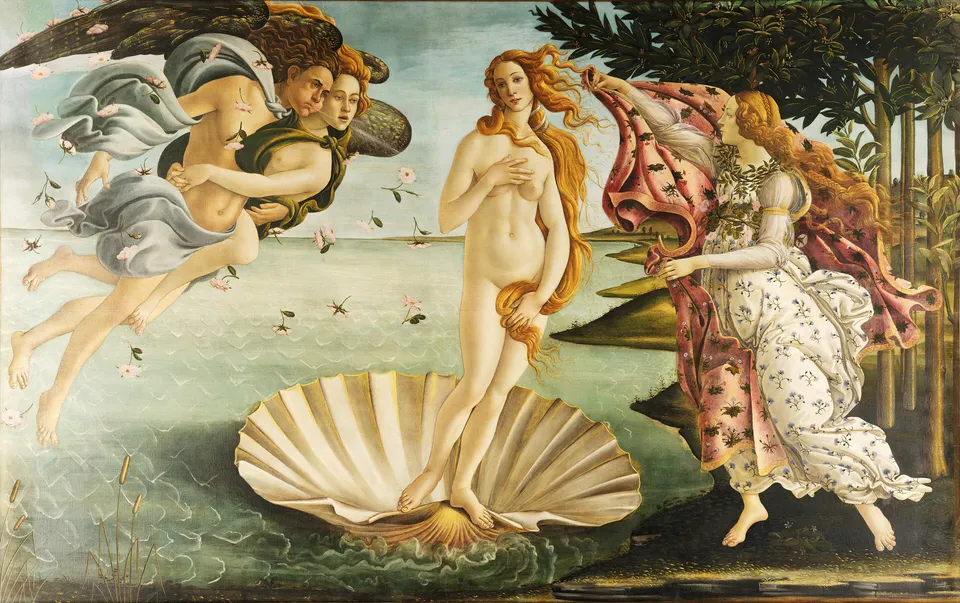
Sandro Botticelli · Public domain · Source
The Renaissance, meaning “rebirth”, revived the culture of ancient Greece and Rome and turned away from the God-centred culture of the Middle Ages to value human individuality and life in this world. Italy had many cities, such as Florence, Venice and Milan, grown rich on Mediterranean trade, and Roman ruins stood everywhere. As the Byzantine Empire declined, Greek scholars and classical texts came west, and the Medici of Florence and the popes patronised artists and scholars.
Petrarch opened humanism through the study of the classics, and Boccaccio portrayed human desires in the Decameron. In art, perspective and anatomy brought realistic representation. Brunelleschi raised the dome of Florence Cathedral (completed 1436); Botticelli painted The Birth of Venus, Leonardo da Vinci The Last Supper and the Mona Lisa, Michelangelo carved the David and painted the Sistine Chapel ceiling, and Raphael painted The School of Athens. Machiavelli, in The Prince (1513), viewed politics realistically, apart from religion and morality.
Carried by printing, the Renaissance spread north of the Alps, leading to the Northern Renaissance and the Reformation. But the Italian Wars, begun by the French invasion of 1494, and the Sack of Rome in 1527 brought the Italian Renaissance to a close. In the same 15th century King Sejong of Joseon created Hangeul and promoted science with the rain gauge and the sundial.