Hesiod Composes the Theogony
Also called: Theogony, Theogonia, Works and Days
Around 700 BC the Boeotian poet Hesiod composed the Theogony, on the beginning of the world, the generations of the gods and how Zeus became king. With his Works and Days, it is the oldest systematic account of Greek myth.
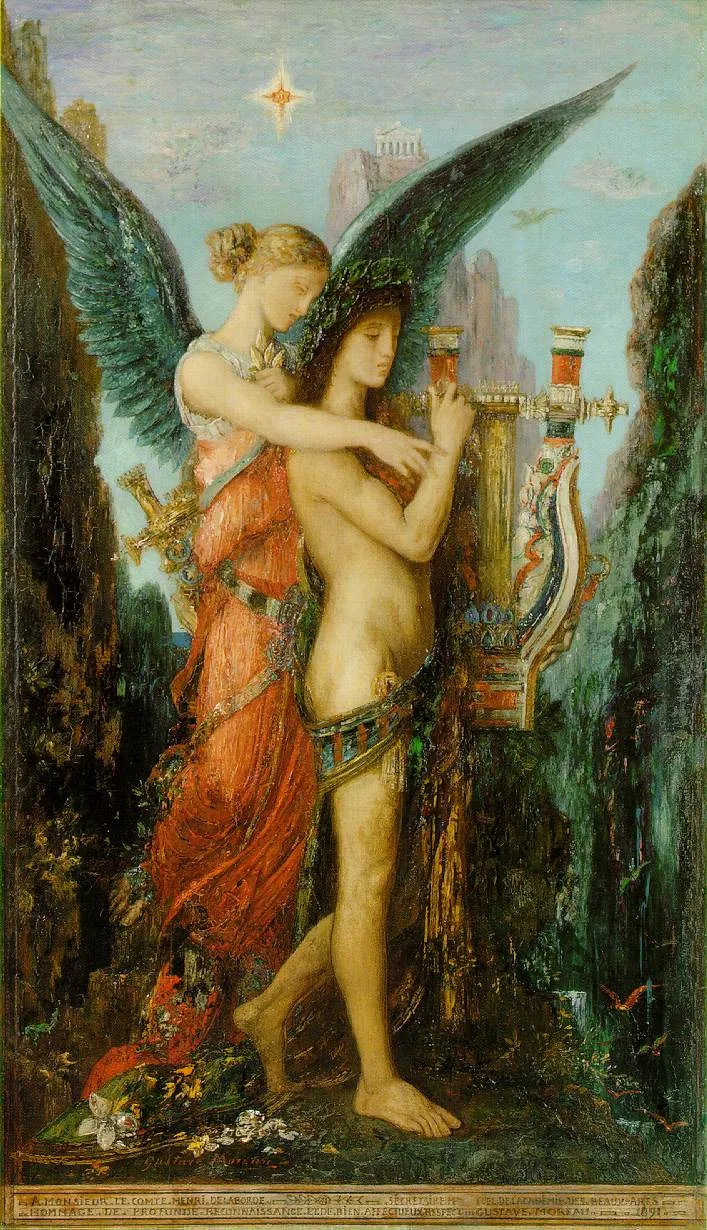
Gustave Moreau · Public domain · Source
At the opening of the Theogony Hesiod says that he was tending sheep at Ascra, a village at the foot of Mount Helicon in Boeotia, when the Muses gave him a laurel staff and called him to be a poet. The Theogony, some thousand lines of hexameter verse, sets out the genealogy of the gods and the struggle for kingship from Chaos and Gaia through Uranus and Cronus to Zeus. The Works and Days (some 800 lines), addressed to his brother Perses, with whom he quarrelled over land, urges justice and honest work and tells the stories of Prometheus and Pandora and the five ages of man.
Both poems are thought to date from the late 8th or early 7th century BC, and whether Hesiod or Homer came first is debated. The historian Herodotus said that it was Homer and Hesiod who gave the Greeks the genealogy of their gods. The Theogony’s succession myth closely resembles the Hittite Song of Kumarbi and the Babylonian Enuma Elish, showing links between Greek and Near Eastern myth.