Gutenberg’s Printing Press
Also called: Gutenberg Bible, 42-line Bible, Printing press
Around 1450 Johannes Gutenberg of Mainz developed a way to print books in quantity with movable metal type and a press, producing the 42-line Bible. Printing carried the Renaissance and the Reformation across Europe.
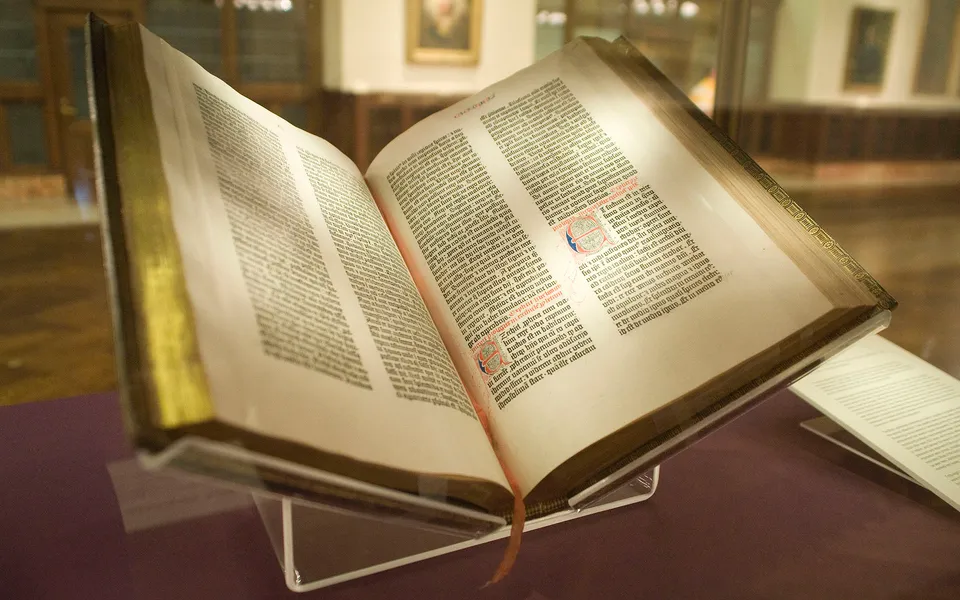
NYC Wanderer (Kevin Eng) · CC BY-SA 2.0 · Source
Until then Europe’s books were costly manuscripts copied by hand by monks. Gutenberg, a metalworker of Mainz, brought together a mould that easily cast identical type from an alloy of lead, tin and antimony, an oil-based ink that clung to metal, and a screw press adapted from the wine press. By this method he printed around 180 copies of the 42-line Bible by about 1455.
Printing spread quickly: by 1500 presses had been set up in more than 200 European towns, books grew cheaper and knowledge spread beyond the clergy and nobility. The classics and the works of humanists were widely read, and it was thanks to printing that Luther’s writings swept across Germany within weeks after 1517. More books appeared in the vernacular languages rather than Latin, laying the ground for national cultures.
Metal-type printing came first in Korea. Records say Goryeo printed the Sangjeong gogeum yemun with metal type around 1234, and the Jikji, printed at Heungdeoksa in Cheongju in 1377, predates the 42-line Bible by more than seventy years. Joseon cast the Gyemi type in 1403 and refined it under Sejong with the Gabin type (1434). In Korea, however, metal type was used by the state and temples to print small runs of the books they needed, and the tens of thousands of Chinese characters demanded vast numbers of type. In Europe, where a 26-letter alphabet met commercial publishing, printing became a force that transformed society.