Introduction of the Gregorian Calendar
Also called: Gregorian calendar, Inter gravissimas
In 1582 Pope Gregory XIII promulgated a new calendar correcting the error of the Julian calendar — the calendar the world uses today.
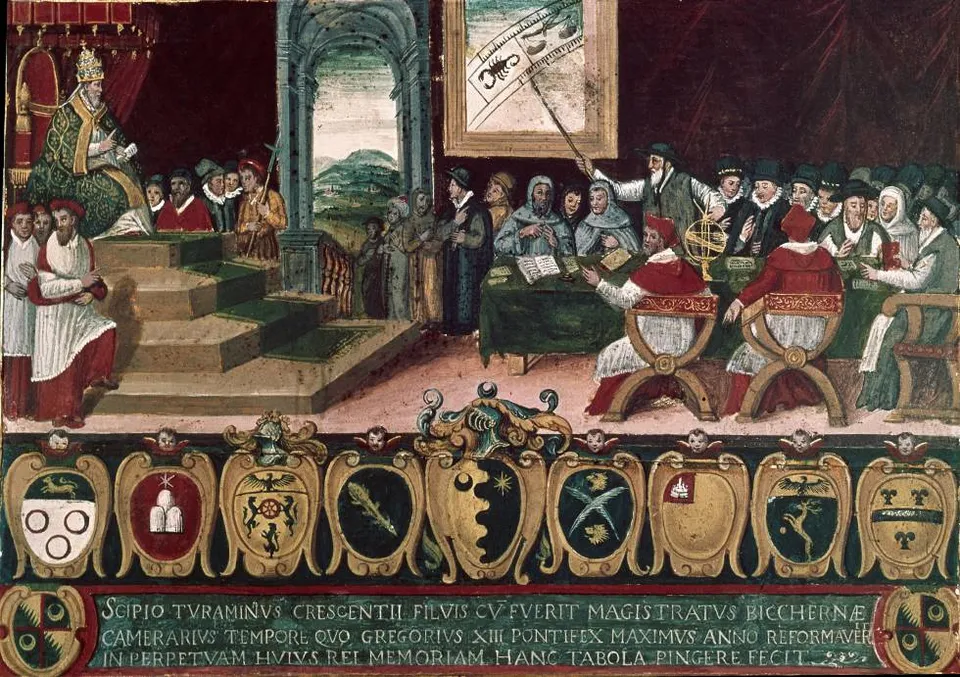
Unknown author · Public domain · Source
The Julian calendar set by Julius Caesar counted the year as 365.25 days, about eleven minutes too long, so that by the 16th century the spring equinox had drifted ten days early and the date of Easter was off. Adopting a scholars’ proposal, Gregory XIII issued a bull on 24 February 1582 ordering that 4 October that year be followed by 15 October, and that years divisible by 100 be leap years only if also divisible by 400.
Catholic countries soon followed, but Protestant and Orthodox lands were slower: Britain changed in 1752 and Russia only in 1918, after the Revolution. Joseon adopted this solar calendar in 1896 in the Eulmi Reform.