German Revolution
Also called: November Revolution, Kiel mutiny
A mutiny of sailors at the naval port of Kiel spread across the country; Wilhelm II abdicated and Germany became a republic, with the Social Democrat Ebert at the head of a provisional government.
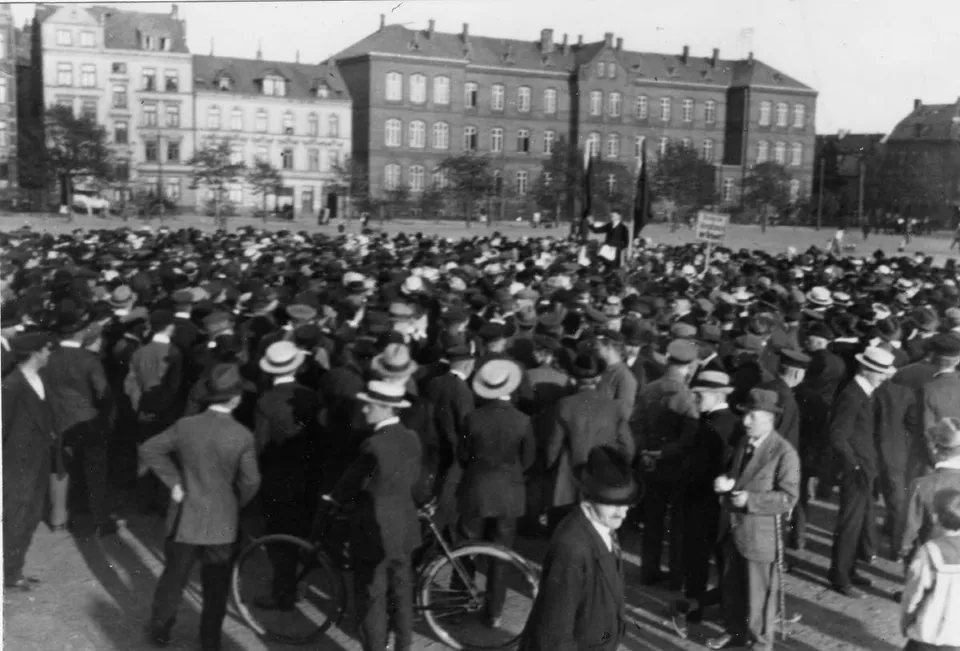
Meyer, Ernst (1885-1960) · CC BY-SA 3.0 de · Source
In autumn 1918, with defeat certain, the naval command still ordered a last sortie, and on 3 November sailors and workers in Kiel rose in revolt. Workers’ and soldiers’ councils on the Russian model sprang up and within days the movement had spread across Germany.
On 9 November in Berlin Chancellor Max von Baden announced the emperor’s abdication and handed the chancellorship to the Social Democratic leader Ebert. The same day the Social Democrat Scheidemann proclaimed a republic from the Reichstag, and Wilhelm II fled to the Netherlands the next day. Two days later the new provisional government signed the armistice.
The Spartacists, who wanted a Russian-style revolution, rose in January 1919, but the government crushed them with the army and Freikorps volunteers, and their leaders Rosa Luxemburg and Karl Liebknecht were murdered. Germany chose parliamentary democracy, but conflict between left and right and quarrels over blame for defeat, such as the “stab in the back” myth, burdened the new republic.