German Monetary, Economic and Social Union
Also called: German monetary union, Währungsunion
The West German mark became East Germany’s legal tender. Wages and pensions were converted one to one, but uncompetitive East German firms collapsed and unemployment soared.
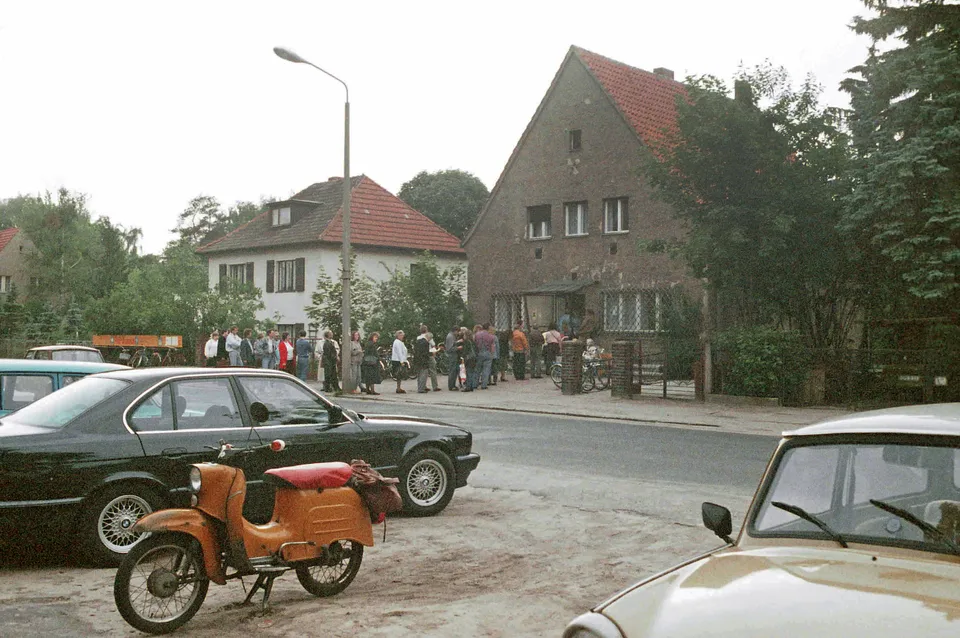
Andreas Lippold · CC BY-SA 4.0 · Source
On 18 May 1990 the two German states signed a state treaty, and from 1 July monetary, economic and social union took effect. The Deutsche Mark replaced the East German mark; wages, pensions and rents were converted one to one, savings one to one up to 2,000–6,000 marks depending on age, and the rest two to one. It was a political decision meant to stem the flow of East Germans to the West.
West German goods soon filled the shops, but at a rate far above real value East German firms lost their competitiveness overnight. As the Treuhand agency privatized or closed state enterprises, unemployment soared, and the costs of unity mounted enormously.