Conflict1202 – 13 April 1204

Fourth Crusade and the Sack of Constantinople

Bound for Egypt but in debt to Venice, the crusade turned aside, captured and sacked the Christian city of Constantinople, and set up the Latin Empire.
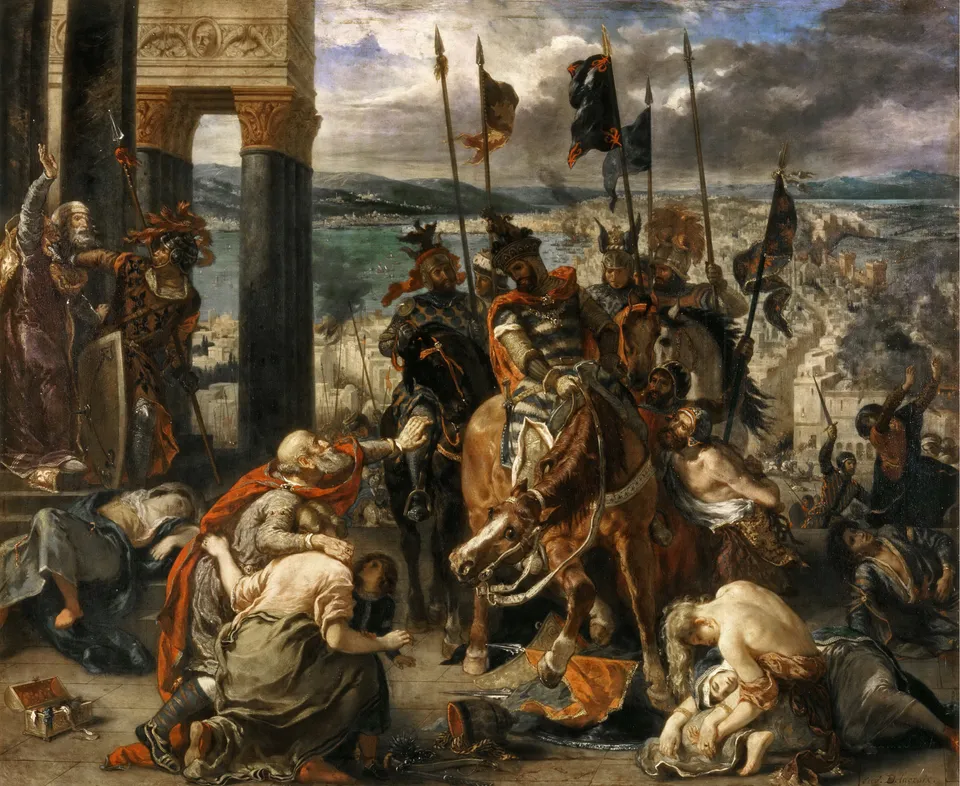
The Entry of the Crusaders into Constantinople — Eugène Delacroix, 1840, Louvre

Eugène Delacroix · Public domain · Source

Pope Innocent III called the crusade, but when the knights could not pay Venice for their fleet, Doge Enrico Dandolo had them attack Zara (today Zadar, Croatia), a Christian city of the King of Hungary, instead. A Byzantine exile prince then promised money and troops, and the crusade sailed for Constantinople.

When the promises went unpaid, the crusaders stormed the city on 13 April 1204 and sacked it for three days; the four bronze horses of St Mark’s were carried off to Venice. They founded the Latin Empire and Venice took islands and ports. The Byzantines held out at Nicaea and regained the city in 1261 but never recovered their old strength, and the rift between the Eastern and Western churches deepened.

The map in 1202

OpenFreeMap © OpenMapTiles © OpenStreetMap contributors

States at the time
Republic of Venice · invader
Byzantine Empire · conquered
Latin Empire · founded
Empire of Nicaea · founded
Places
Constantinople

People

  • Enrico Dandolo1205

    commander · Doge of Venice who, old and blind, steered the Fourth Crusade to Zara and Constantinople

Before and after

Themes that include this event

  • Late Medieval Europe and the Renaissance1077 – 1517

    From Canossa to the eve of the Reformation — papal power at its height and in decline, towns and parliaments, royal power growing through the Hundred Years’ War and the Black Death, and the Renaissance and printing

  • The Crusades1095 – 1291

    From the Council of Clermont to the fall of Acre — two centuries of war between Latin Europe and the Islamic world over the Holy Land