Founding of the Song and Civil Governance
Also called: Chenqiao mutiny, Northern Song
Zhao Kuangyin (Emperor Taizu), a Later Zhou general, founded the Song in the Chenqiao mutiny of 960, took military power from the governors into imperial hands and favoured civil officials chosen by examination. China proper was reunified in 979.
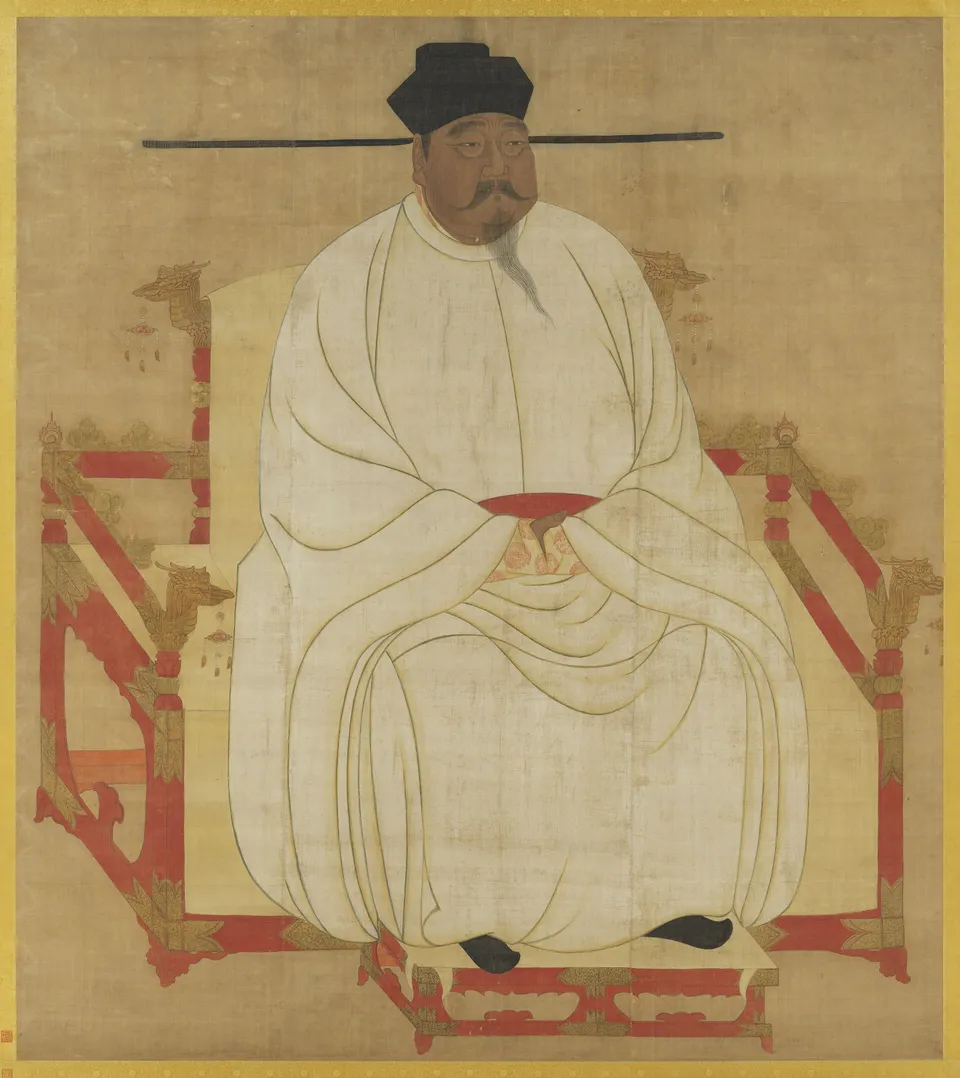
Unknown author · Public domain · Source
Zhao Kuangyin, commander of the Later Zhou palace army, set out against the Khitan in 960; at Chenqiao post station his officers draped him in imperial robes and acclaimed him emperor (the Chenqiao mutiny), and he returned to Kaifeng to found the Song. He stripped the military governors of troops and revenue, strengthened the palace army under direct imperial command and sent civil officials from the capital to run the provinces.
He greatly expanded the examinations and, in 973, made regular the palace examination, its final stage held by the emperor himself. Rule by civil officials chosen by examination — the scholar-officials — rather than by soldiers became the founding principle of the Song.
Taizu absorbed the southern states one by one, and his brother Taizong ended the era of division by destroying the Northern Han in 979. But the Sixteen Prefectures stayed in Khitan hands, and the Song, militarily weak under civil rule, would later buy peace from the Liao and Western Xia with huge payments. Goryeo opened relations with the Song in 962 and took in its culture; the civil examinations Gwangjong introduced in 958 belong to the same current.