Feudalism and Manorialism
Also called: Feudal system, Manorial system, Serfdom
From about the 9th century Western Europe developed feudalism, in which lords and vassals exchanged land (fiefs) for loyalty, and manorialism, in which lords ran estates worked by serfs.
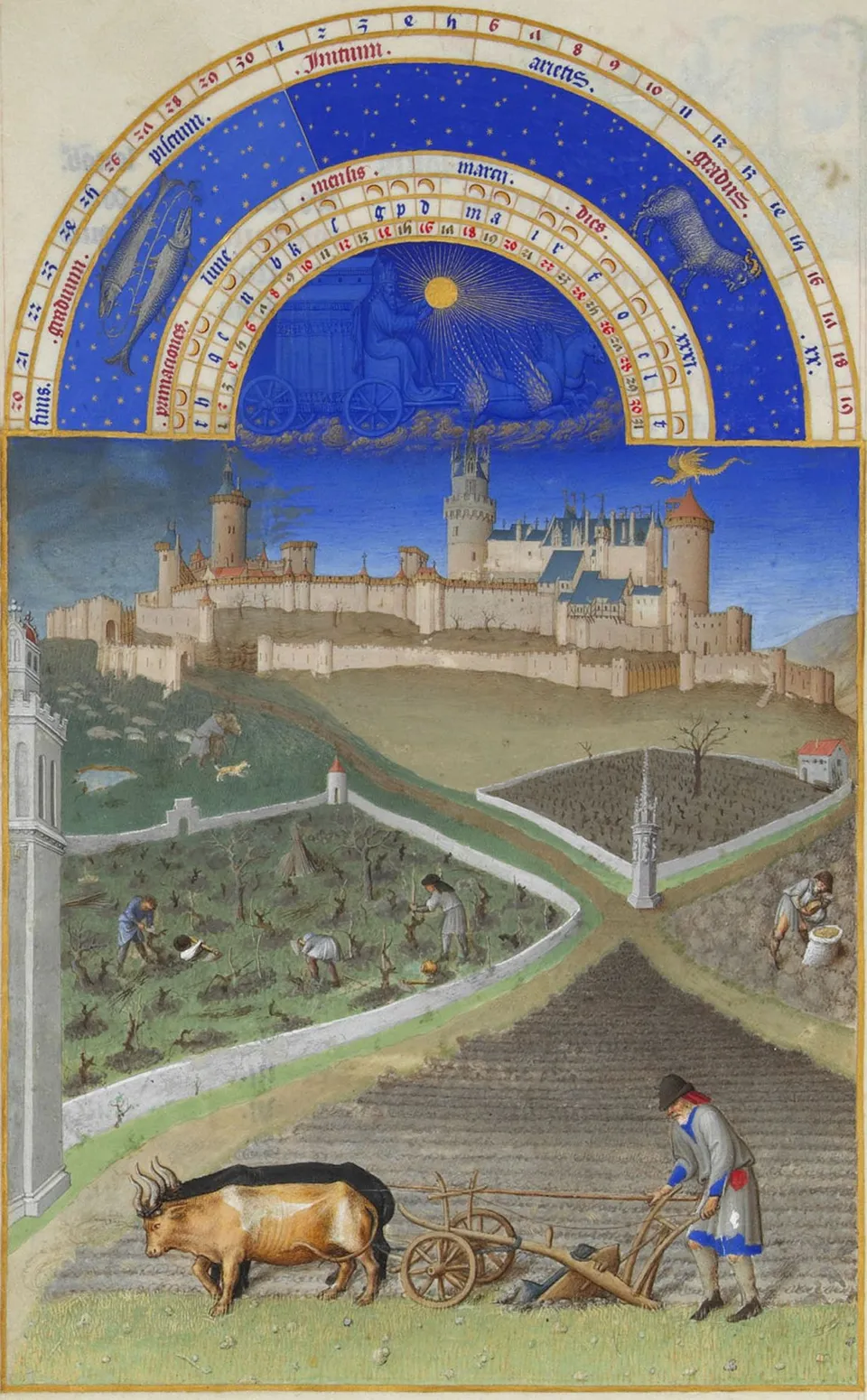
Limbourg brothers / Barthélemy d'Eyck · Public domain · Source
As the Frankish empire split and the Norse, Magyars and Muslims invaded in turn, kings lost the power to protect their people. People turned to local magnates who could defend them, and the Roman practice of granting land (beneficium) merged with the Germanic war-band (comitatus) to form feudalism. The lord gave the vassal a fief and protection; the vassal owed loyalty and military service. The bond was a reciprocal contract that could be broken if either side failed in its duties.
The economic unit of feudal society was the manor, made up of the lord’s demesne, the peasants’ holdings and shared pasture and woodland. Most peasants were serfs, not free to move or choose their work; they owed labour on the demesne and dues in kind, and paid fees on marriage and death. The lord held immunity, barring royal officials from his manor, and judged his serfs. The spread of the three-field system and the heavy plough raised output.
Medieval people saw society as made up of “those who pray (clergy), those who fight (knights) and those who work (peasants)”. Feudalism peaked in the 11th–13th centuries and was shaken by the Crusades and the growth of towns and a money economy. At the same time Goryeo also granted officials the right to collect taxes from land under the jeonsigwa system (976), but unlike Western fiefs these grants were in principle not hereditary.