Fall of the Berlin Wall
East Germany opened its border and the Berlin Wall came down, a symbol of the end of the Cold War.
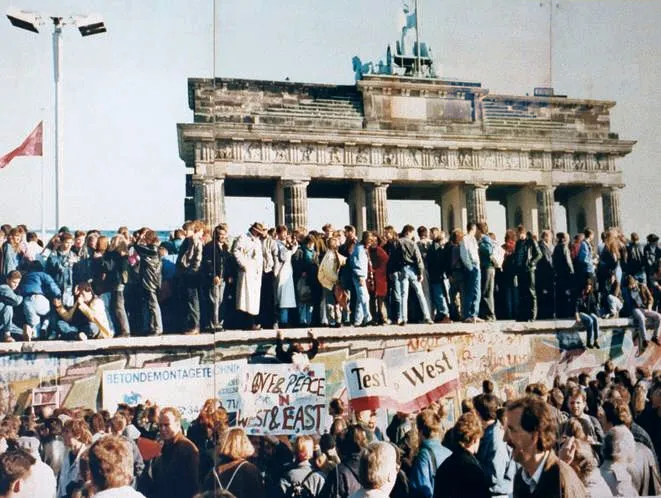
Unknown photographer, Reproduction by Lear 21 at English Wikipedia . · CC BY-SA 3.0 · Source
Built by East Germany in 1961, the Berlin Wall symbolised the Cold War and the division of Germany. In the late 1980s, when the Soviet leader Gorbachev launched reform and openness (perestroika and glasnost) and signalled that he would not intervene in Eastern Europe, communist regimes there began to totter — in Poland the free trade union Solidarity won elections.
In the summer of 1989 Hungary opened its border with Austria and huge numbers of East Germans fled west by that route, while the Monday demonstrations in Leipzig and elsewhere, chanting "We are the people", grew. On the evening of 9 November party spokesman Günter Schabowski announced new travel rules and mistakenly said they took effect "immediately"; crowds rushed to the checkpoints, and the guards, unable to hold them back, opened the gates.
People climbed on the Wall and joyfully chipped at it with hammers. At about the same time the Velvet Revolution in Czechoslovakia, the Romanian Revolution and others toppled communist regimes across Eastern Europe (the Revolutions of 1989), and Germany was reunified the following October. The fall of the Wall became the symbol of the end of the Cold War and left divided Korea with both hope and challenges for its own reunification.