Politics16 October 1793

Execution of Marie Antoinette

Held in the Conciergerie, the queen was condemned for treason by the Revolutionary Tribunal and guillotined the next day.
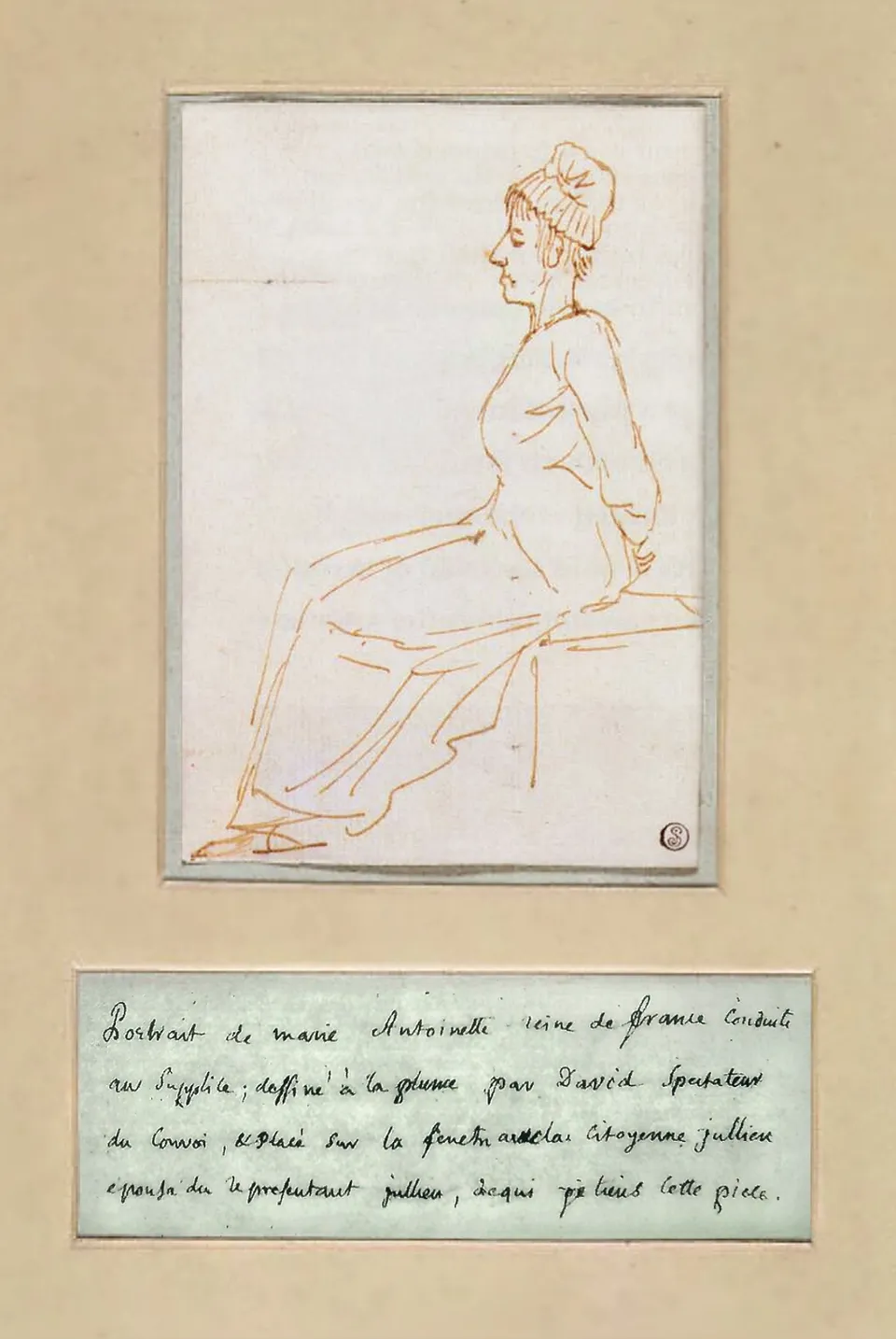
Marie Antoinette on her way to the guillotine — sketch made from the roadside by Jacques-Louis David, 16 October 1793, Louvre

Jacques-Louis David · Public domain · Source

After Louis XVI’s execution Marie Antoinette was separated from her son and moved to the Conciergerie prison in August 1793. At her trial before the Revolutionary Tribunal, which opened on 14 October, she was accused of conspiring with foreign powers and squandering the nation’s wealth, and even monstrous charges concerning her son were raised. She was condemned in the early hours of 16 October.

That day she was driven in an open cart, hands bound, to the Place de la Révolution and guillotined. David, watching from the roadside, sketched her final appearance. There is no evidence that she ever said “Let them eat cake”.

The map in 1793

OpenFreeMap © OpenMapTiles © OpenStreetMap contributors

States at the time
France
Places
Conciergerie, Place de la Concorde

People

  • Marie Antoinette1755 – 1793

    related figure · Queen of France, wife of Louis XVI, born a Habsburg archduchess of Austria; caught in the flight to Varennes and executed in 1793

  • Jacques-Louis David1748 – 1825

    related figure · Neoclassical painter and Convention deputy who painted The Tennis Court Oath and The Death of Marat, staged the revolutionary festivals and later became Napoleon’s court painter

Before and after

Themes that include this event

  • The French Revolution1787 – 1799

    From the Assembly of Notables and the Estates-General to the coup of 18 Brumaire — twelve years that toppled the absolute monarchy, founded a republic, passed through Terror and reaction, and ended with Napoleon