The Enlightenment and the Encyclopédie
Also called: Enlightenment, Age of Enlightenment, Encyclopédie
In the 18th century the Enlightenment, which used reason to criticise outdated institutions and superstition, spread from France. Voltaire attacked the intolerance of the Church, and from 1751 Diderot and d’Alembert published the Encyclopédie.
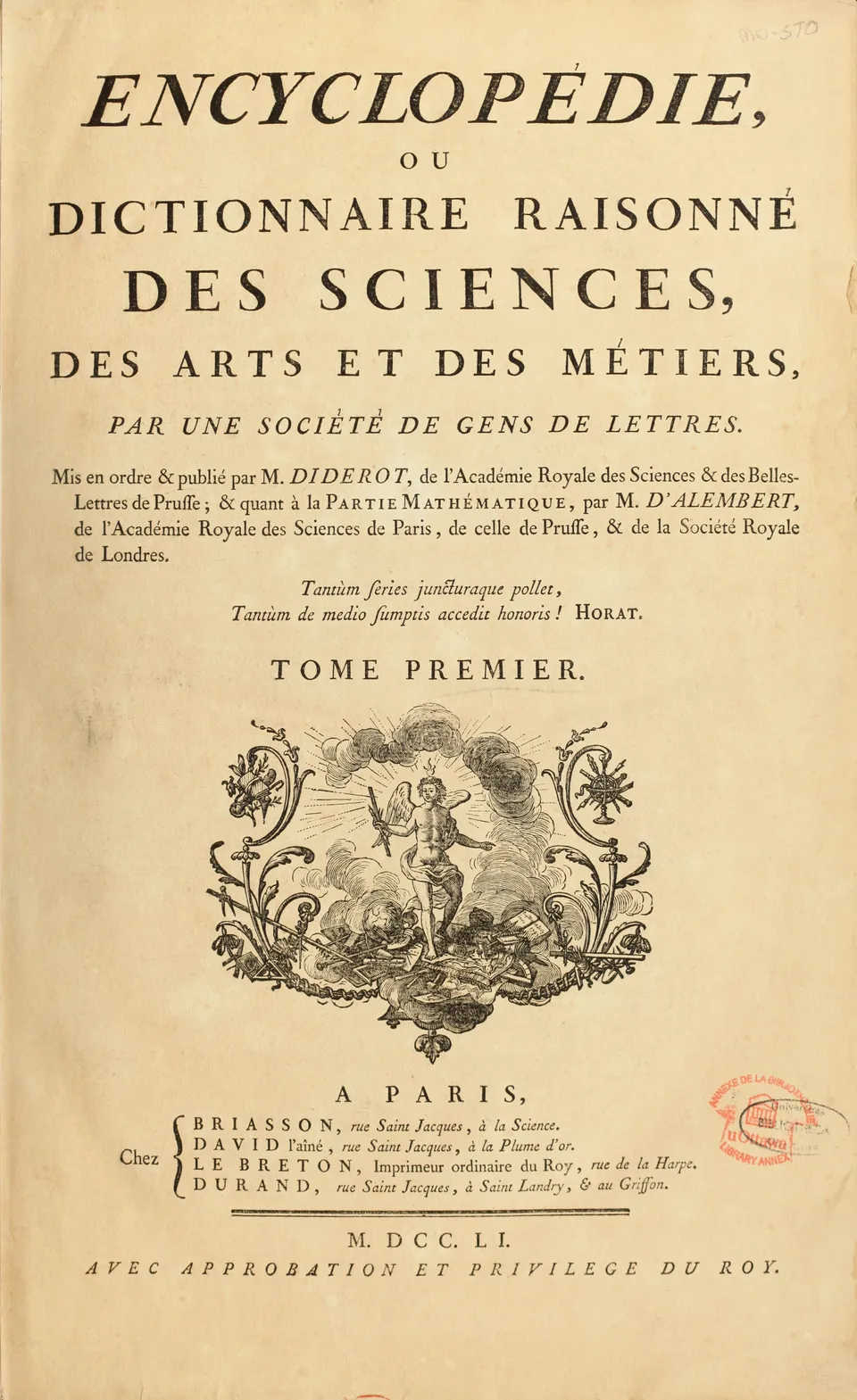
Long List of Contributors to the Encyclopédie · Public domain · Source
Just as Newton had found the laws of nature by reason, the belief spread through 18th-century Europe that people and society, too, could be improved by reason. Because it sought to drive out ignorance and prejudice with the light of reason, it is called the Enlightenment. Enlightenment thinkers criticised absolute monarchy, privileged estates and the authority of the Church, believed in progress and exchanged ideas in the salons and coffee houses of Paris and through newspapers and books.
Voltaire’s Philosophical Letters (1734) praised English liberty and toleration to criticise France, and his novel Candide and Treatise on Tolerance attacked religious fanaticism and intolerance. From 1751 to 1772 Diderot and the mathematician d’Alembert published the Encyclopédie in 17 volumes of text and 11 of plates, setting out learning and even the techniques of the crafts in the light of reason. Voltaire, Rousseau, Montesquieu and the physiocrat economist Quesnay wrote for it, and though the government and Church banned it, it continued to appear in secret.
The Enlightenment influenced the enlightened despots of Prussia, Russia and Austria and became the intellectual foundation of the American and French Revolutions. At the same time in Joseon, the Northern Learning school urged the study of the goods and Western science that reached Korea through Qing China.