Discovery of Nuclear Fission
Also called: Fission of uranium
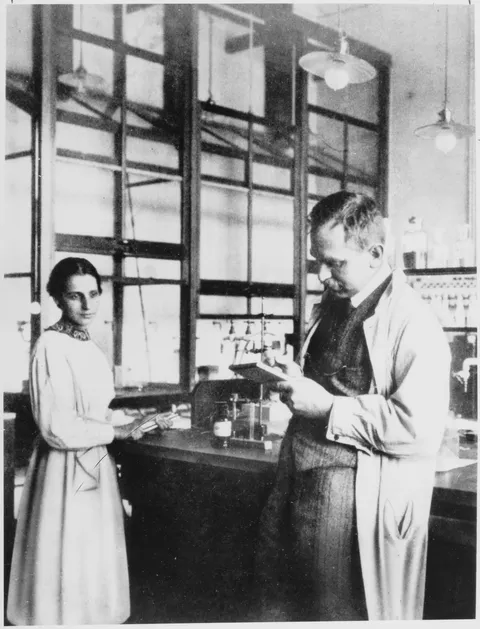
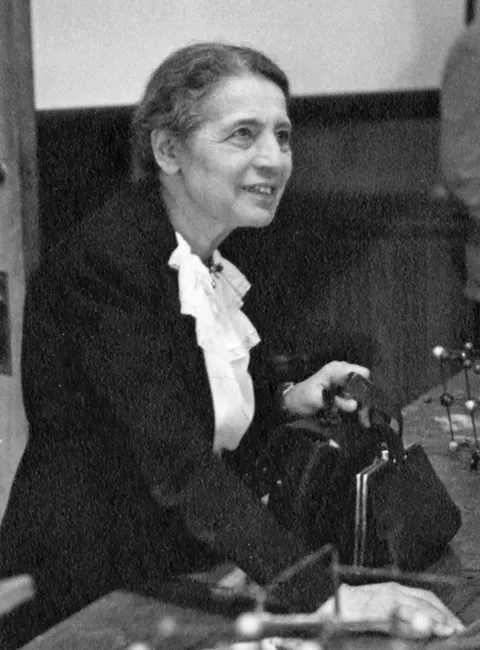
In December 1938 the Berlin chemists Otto Hahn and Fritz Strassmann found barium produced from uranium bombarded with neutrons. The exiled Lise Meitner and Otto Frisch explained that the uranium nucleus had split in two, releasing enormous energy.
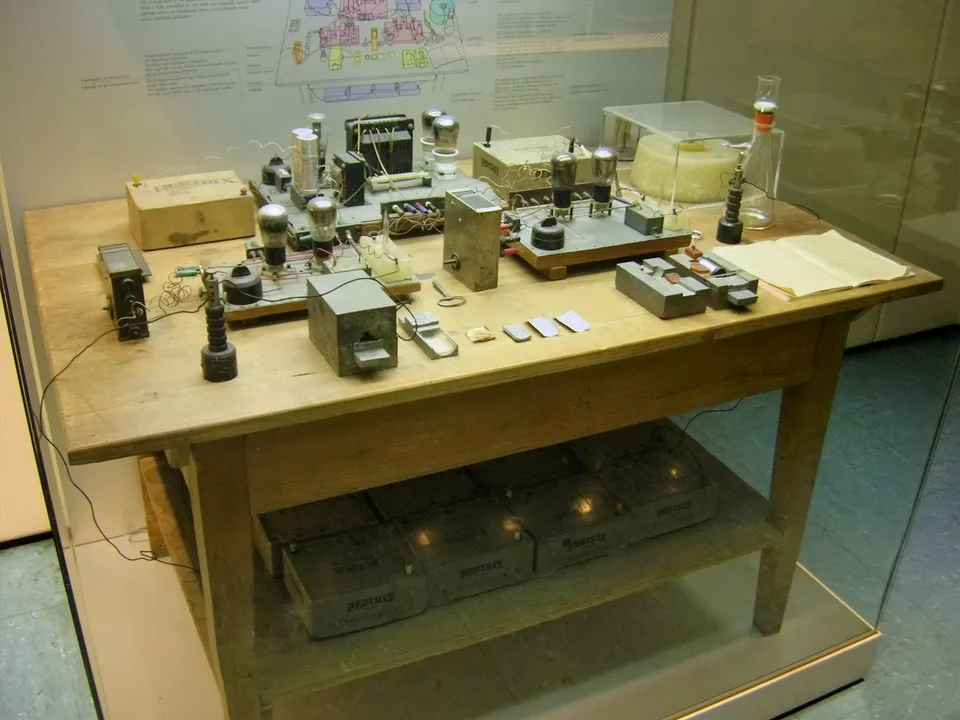
J Brew · CC BY-SA 2.0 · Source
In December 1938, at the Kaiser Wilhelm Institute for Chemistry in Berlin-Dahlem, Otto Hahn and Fritz Strassmann found barium, a far lighter element, in uranium bombarded with neutrons. Their colleague Lise Meitner, who had fled Nazi Germany that summer because she was Jewish and was now in Sweden, worked out around Christmas, walking in the snow with her nephew Otto Frisch, that the uranium nucleus had split in two like a drop of water. Frisch named it "fission" after cell division.
The energy released was immense, as Einstein’s E=mc² predicted, and if the neutrons thrown off split further nuclei a chain reaction could follow. When Bohr brought the news to America in January 1939, scientists soon realised it could make a terrible bomb. Hahn received the 1944 Nobel Prize in Chemistry for the discovery; Meitner did not share it.