Deucalion’s Flood
Also called: Deucalion, Pyrrha, Greek flood myth
A legend handed down over the centuries.
A Greek myth told in Apollodorus’ Library and Ovid’s Metamorphoses. When Zeus sent a great flood to wipe out the wicked bronze race, only Deucalion, son of Prometheus, and his wife Pyrrha survived in an ark, and they remade mankind by throwing stones.
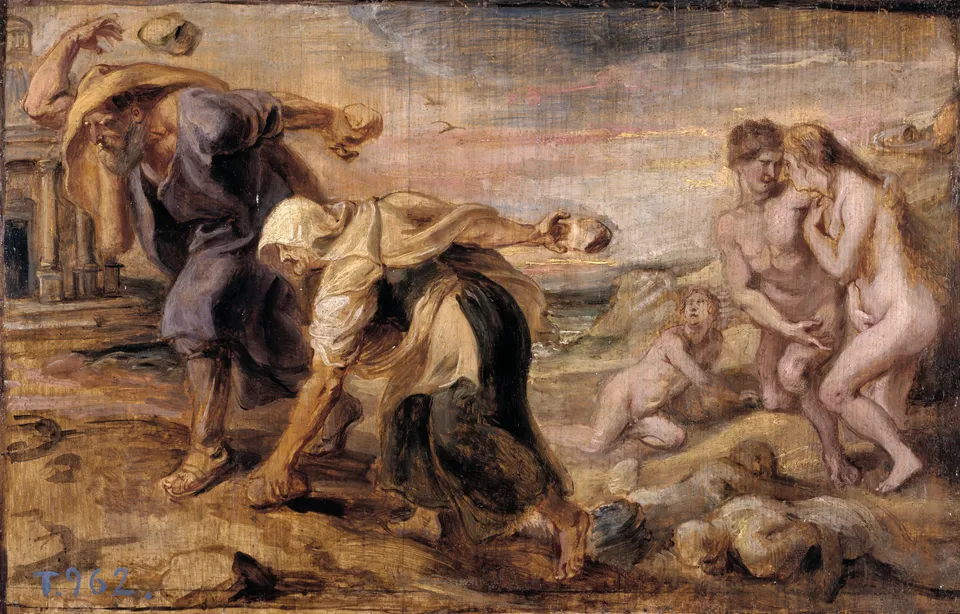
Peter Paul Rubens · Public domain · Source
This Greek myth is told in Apollodorus’ Library and in Book 1 of the Roman poet Ovid’s Metamorphoses. When Zeus resolved to destroy the people of the Bronze Age, Prometheus told his son Deucalion to build a great chest (an ark). Deucalion and his wife Pyrrha, daughter of Epimetheus and Pandora, drifted for nine days and nights before coming to rest on Mount Parnassus (in Apollodorus), and when the rain stopped they sacrificed to Zeus.
In Ovid, following an oracle of the goddess Themis, the pair threw over their shoulders “the bones of the great mother” — the stones of the earth; the stones Deucalion threw became men, and those Pyrrha threw became women. Their son Hellen was said to be the ancestor of the Greeks (Hellenes). The pattern of gods punishing mankind with a flood that one couple survives resembles the Mesopotamian Epic of Gilgamesh and the biblical story of Noah.