Dante’s Divine Comedy
Also called: Divine Comedy, La Divina Commedia
Exiled from Florence, the poet Dante wrote the Divine Comedy from about 1308 to 1321 in Tuscan rather than Latin, opening the way for Italian literature and the Renaissance.
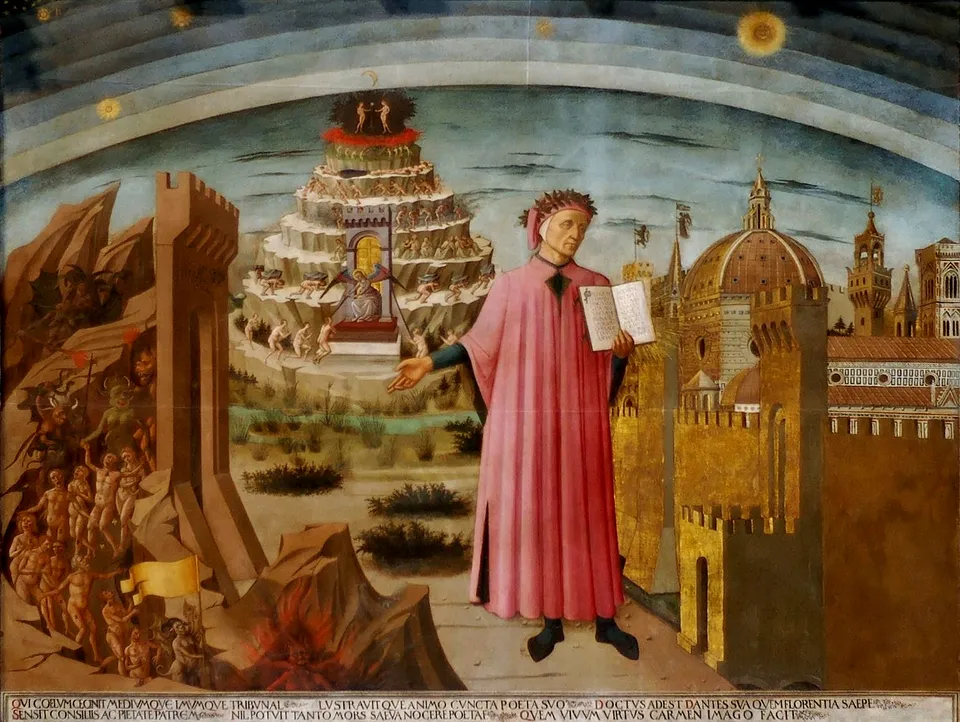
Domenico di Michelino / After Alesso Baldovinetti · Public domain · Source
Dante, a Florentine politician, was driven from his city in 1302 by factional strife. The Divine Comedy, written during his wanderings, tells of his journey through Hell, Purgatory and Paradise, guided by the Roman poet Virgil and by Beatrice, whom he had loved; while expressing the medieval Christian world-view, it honours the ancient poets and sharply criticises real popes and politicians.
Written not in Latin, the language of scholars, but in the Tuscan that people spoke, it became the basis of modern Italian, and with Petrarch and Boccaccio Dante became a forerunner of Renaissance literature. Around this time Yi Je-hyeon of Goryeo was studying Neo-Confucianism among scholars in the Yuan capital.