Concordat of Worms
Also called: Pactum Calixtinum, Concordat of Worms (1122)
In 1122 Holy Roman Emperor Henry V and Pope Callixtus II made an agreement at Worms that brought the Investiture Controversy over the appointment of clergy to a close.
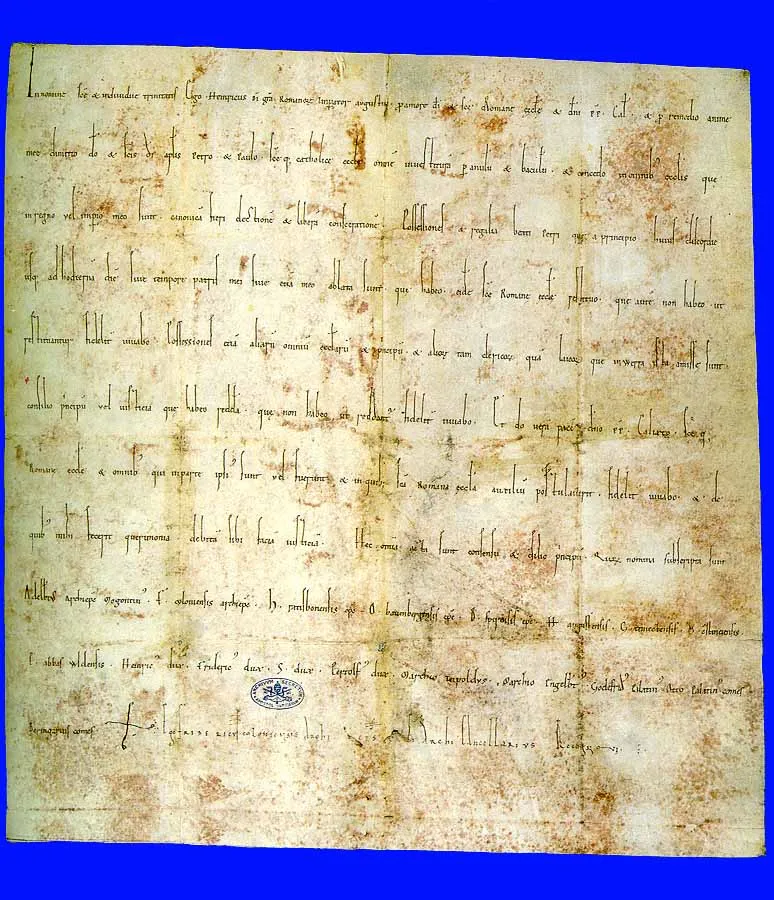
Unknown author · Public domain · Source
Even after Canossa (1077), the struggle between emperor and pope over who should appoint the clergy went on for nearly fifty years. On 23 September 1122 Henry V and the legates of Pope Callixtus II concluded an agreement at Worms. The emperor gave up investiture with the ring and staff, the symbols of spiritual office, and allowed bishops to be elected under canon law; in return, in Germany he could attend elections and grant bishops their worldly lands and rights with the sceptre.
The Church’s right to appoint its clergy was thus confirmed and papal authority rose, laying the ground for the peak of papal power under Innocent III in the 13th century. In the same year (1122) King Injong came to the throne in Goryeo, and his in-law Yi Ja-gyeom dominated the court before rising in rebellion in 1126.